
How Pediatric Rheumatologists Treat Joint Issues
26 Dec, 2025
A Parent’s Friendly Guide to Childhood Joint Health
It's worrying and overwhelming to see one's child struggling with pain, stiffness, or swelling in the joints. Though joint problems are an affliction usually related to adults, children can also be afflicted with arthritis, juvenile idiopathic arthritis, or even other autoimmune diseases. Thankfully, specialized care exists. Knowing how pediatric rheumatologists treat joint issues and these conditions empowers parents to take early action and provide the best for their children.
This manual will educate on causes, treatments, and most importantly, the significance of pediatric rheumatologists in maintaining activity levels for healthy children.
Recognizing Joint Issues in Kids
Joints in children are ever-growing and are prone to various diseases. Some common symptoms through which one may come to know if something is amiss with his/her joints are as follows:
- Painful or swollen joints
- Stiffness, particularly so in the mornings
- Problems with walking or carrying out everyday activities
- Fatigue or lack of energy while playing
These factors, if identified early, can make a big difference in the quality of care. The diagnosis or treatment of arthritis in children is, in fact, all about observing, examining, or running some tests, if necessary.
The Role of a Pediatric Rheumatologist
A pediatric rheumatologist is a medical expert trained to diagnose and treat children who suffer from autoimmune or inflammatory joint conditions. They are sensitive to the peculiar needs of growing bodies and tailor treatment individually to reduce pain, prevent complications, and support normal growth.
Some of the major responsibilities performed by a pediatric rheumatologist include:
Performing thorough assessment of joints, muscles, and mobility
- Ordering and interpreting of lab tests and imaging
- Diagnosis of conditions such as juvenile idiopathic arthritis, lupus, and vasculitis
- Treatment planning for the long term
Coordinating care with physical therapists, occupational therapists, and other specialists
Early consultation with a specialist thus provides the grounds for ensuring the most effective interventions for the child's joint health.
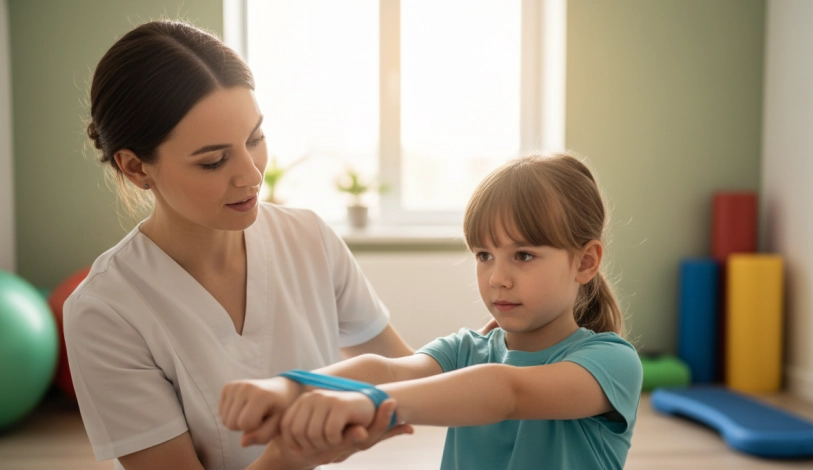
Joint Pain Treatment in Children
When it comes to joint pain treatment in children, the approach is multi-faceted and tailored to the underlying cause. Common strategies include:
1. Medications
Nonsteroidal anti-inflammatory drugs: These medications will help reduce pain and swelling.
Disease-modifying antirheumatic drugs: To help manage autoimmune activity
- Biologic therapies in severe cases target specific immune pathways.
- Corticosteroids May be used short-term for acute flares
- Medication plans have to be very carefully adjusted according to age, weight, and stage of growth.
2. Occupational and physical therapy
Regular exercise keeps joints flexible, builds muscle, and makes it easier to move around. Therapists also suggest ways to adapt to daily tasks.
3. Care for your home and lifestyle
- Warm baths or compresses help with stiffness.
- A balanced diet is good for your health in general.
- Encouraging light activity instead of complete rest
4. Surgery
This is only done in very rare cases. If the joints are badly damaged, surgery may be suggested. Most of the time, these are done as a last resort after looking at other treatment options.
Treating Joint Inflammation in Kids
The most important element of most pediatric rheumatologic diseases is the problem of inflammation. When treating joint inflammation in kids, the primary goals are to decrease the pain, minimise any damage to the joints, and keep them functioning normally. Treatment usually consists of three methods working together:
- Medications used to decrease the inflammation;
- Physical therapy to help the child maintain normal joint mobility;
- Regular appointments with a pediatric rheumatologist, so that they can monitor the child's condition and adjust the medication as necessary, as the child grows.
It is extremely important to start treating a child with a rheumatologic condition early in order to prevent long-term joint damage or deformities, as well as to maintain their quality of life
Childhood Arthritis Diagnosis and Care
- In children, juvenile arthritis is a frequent cause of ongoing ache in the joints and is diagnostic of:
- Complete Medical History With Symptom Tracking
- Evaluations for Joint Swelling, Warmth, Range of Motion
- Blood Test For Inflammatory Markers, Autoimmune Antibodies
- Radiographs/MRI to Evaluate Joint Damage.
Once diagnosed, childhood arthritis diagnosis and care focuses on controlling inflammation, reducing pain, and promoting normal growth and activity.
Why Early Intervention Matters
Early intervention by visiting a pediatric rheumatologist will help prevent complications and improve outcomes over the long term for children with rheumatological diseases.
Children receiving timely and specialized medical attention including early intervention by a pediatric rheumatologist are more likely to:
- Maintain joint function
- Remain physically active in school and participate in extracurricular activities such as sports
- Avoid permanent joint damage
- Achieve a higher quality of life overall.
Supporting Your Child at Home
The role of parents as managers of children’s joints is critical.
- Parents should encourage consistent use of medications.
- They are also responsible for identifying new symptoms or flares of their child's joint complaints.
- Daily gentle movement or exercise should be encouraged.
- Allies to help facilitate communication between the therapists and the rheumatologist for children with joint problems.
Children with joint diseases can have successful active lifestyles if they receive appropriate guidance and care.