
The Fever Freak-out: A Realistic Guide for Parents
23 Feb, 2026
If you’ve ever woken up at 3:00 AM to a child who feels like a radiator, you know the instant spike of adrenaline that follows. Your mind immediately starts racing: How high is too high? Should I call the doctor now? Is this dangerous? At Neoclinic Children’s Hospital, we call this "fever phobia," and it’s something almost every parent experiences.
The first thing to understand is that fever in children is not actually the enemy. It is a tool. It’s the body’s way of turning up the heat to make life miserable for viruses and bacteria. A fever tells us the immune system is working exactly as it should. However, knowing how to handle it and when to worry is the key to keeping your cool when your child is burning up.
Treating the Child, Not the Number
One of the biggest myths in parenting is that a higher number on the thermometer always means a sicker child. In reality, a high fever in child patients (even up to103°F or 104° F) isn't always a cause for panic if the child is still alert.
If your daughter has a102°F fever but is still sipping juice and complaining about the cartoon you picked, she is likely okay. On the other hand, if your son has a 100.4° F fever but is limp, won't wake up easily, or is inconsolable, that is much more concerning. We always tell parents: look at the child, not the device.
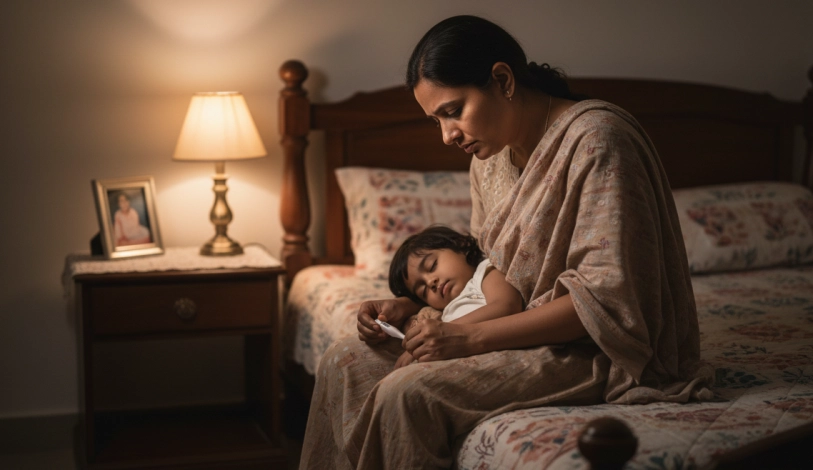
Practical Child Fever Home Treatment
When your little one is miserable, your goal for child fever home treatment should be comfort, not necessarily getting the temperature back to exactly 98.6° F. Here is how to help them through the spike:
- Hydration is Vital: Fever causes the body to lose moisture through the skin and lungs. Keep the fluids coming water, diluted juice, or even a popsicle can prevent dehydration.
- The "One Layer" Rule: Don't bundle a feverish child in heavy blankets. This traps the heat against their skin. Dress them in light, breathable cotton.
- Tepid, Not Cold: If you give your child a bath, use lukewarm water. If the water is too cold, it causes shivering, which actually raises the internal body temperature even higher.
- Medication Timing: Acetaminophen or Ibuprofen (for kids over 6 months) can help, but always dose by weight, not age. If the fever drops a degree or two and your child starts acting more like themselves, the medicine is doing its job.
Knowing When Fever is Dangerous for Kids
While most fevers are harmless, there are specific "red flags" that require an immediate call to your pediatrician or a trip to Neoclinic. Knowing when fever is dangerous for kids can save lives:
- The Age Factor: Any fever in a baby under 3 months old (100.4° F or higher) is an automatic medical emergency. Young infants don't have the immune strength to fight off infections without help.
- The "Lethargy" Test: If your child is difficult to wake up or seems completely out of it even after the fever drops slightly with medication.
- Physical Signs: A stiff neck, a severe persistent headache, or a purple rash that looks like tiny bruises on the skin are signs that something more serious is happening.
- Duration: If a fever lasts longer than three to five days, it’s time for an office visit to check for secondary infections like ear infections or pneumonia.
At Neoclinic, we are here to help you navigate these stressful moments. We would much rather you call us with a "false alarm" than sit at home worrying. Your peace of mind is part of your child’s healing process. Trust your instincts, if something feels "off," we are here to take a look and get your little one back to their usual, bouncy self.