
Why Premature Babies Need NICU Care
19 Dec, 2025
A Gentle, Heartfelt Guide for New Parents
Bringing a child into the world can be a joyous event filled with excitement. However, when that child arrives sooner than anticipated, the experience can be overwhelming. Parents may find themselves feeling an array of emotions, including fear, confusion, and hope, all at once. Understanding why premature babies need NICU care. Because a neonatal intensive care unit can help ease the burdens of your worries and clarify your questions during this time of vulnerability. This blog will give you information that is presented in an easy-to-read format, similar to how a doctor would speak with new parents.
Understanding Premature Birth & Why NICU Is Important
What Happens When Babies Arrive Too Early?
A baby is considered premature when born before 37 weeks of pregnancy. These early arrivals are tiny fighters but their organs are still developing. The NICU is not only a unit for treating "bad" things, but it also allows preterm infants a safe place to continue their journey to becoming healthy. The ability to support preterm infants through the care of trained medical staff, the use of specialized equipment, and the ability to create a healing environment make it possible for preterm infants to grow and develop in safety while they are being prepared for their next steps in life.
Health Risks for Premature Newborns
Why Extra Support Is Essential in Early Days
Premature babies often face certain challenges because their bodies haven’t fully matured. These health risks for premature newborns vary depending on how early the baby is born, but even late preterm babies may need monitoring.
Some risks common among preterm infants include:
1. Difficulty Breathing
As one of the last developing organs, many preterm infants require significant assistance, such as supplemental oxygen and ventilators, to be able to take in air comfortably.
2. Weakened Immune System
The immune systems of many preterm infants are not fully developed and do not have enough strength to defend their bodies against infection; therefore, preterm infants require an environment that is chemically clean and free from germs (the Neonatal Intensive Care Unit (NICU) environment).
3. Feeding Problems
Many preterm infants do not yet have the ability to suck and swallow to a sufficient degree and require tube feeding until they gain enough strength to feed independently.
4. Difficulty Maintaining Body Temperature
Due to their lack of body fat and the thinness of their skin, preterm infants lose heat rapidly; therefore, incubators in the NICU are used to provide warmth and protection.
5. Immature Organs
As preterm infants are born with many organs still in the early stages of development, they will require extensive support from their caregivers for an extended period of time.
Understanding the health risks for premature newborns helps parents to understand that the provision of NICU care is more than "just" medical treatment. This type of care provides life-sustaining support for a newborn infant during a formative period in the infant's overall development.
NICU Care for Preterm Infants
What Happens Inside the NICU?
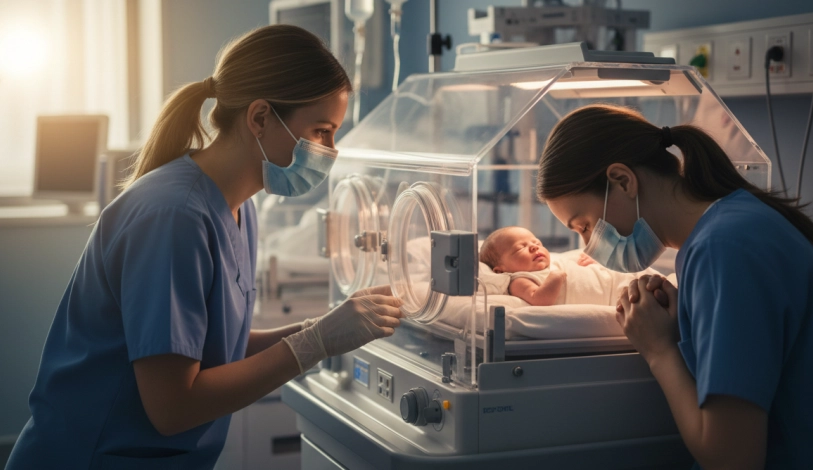
Parents often feel anxious when they see their tiny baby attached to wires or lying inside an incubator. But every machine, monitor, and staff member inside the NICU plays a vital role in NICU care for preterm infants.
Here’s what the NICU provides:
1. Temperature Control & Incubators
The incubator acts like an artificial womb warm, controlled, and safe.
2. Respiratory Support
Some newborns receive oxygen through small tubes, while others may require CPAP or mechanical ventilation.
3. Feeding Support
Until they develop enough strength and coordinated movement for breast or bottle feeding, sick or premature newborns receive nutrition through feeding tubes.
4. Continuous Heart Rate, Respiratory Rate, Body Temperature & Pulse Oximetry Monitoring
To ensure immediate attention can be given to any changes in Heart Rate, Respiratory Rate, Body Temperature and Pulse Oximetry measurements, they are constantly monitored.
5. NICU Specialists (Neonatologist and NICU Nurse) on Premature Infant Care
Neonatologists and NICU nurses are specialists at assessing for small changes in the physical signs of health or illness in premature infants.
6. Skin-to-Skin Kangaroo Mom Care
Caring for your baby by providing skin-to-skin (kangaroo) contact is one of the most important things that Cowans (and others) can do to encourage attachment and improve the baby's ability to breathe and regulate body temperature when the baby has a stable health status and longitude can be maintained.Everything happening inside the NICU ensures that NICU care for preterm infants supports natural growth until babies are strong enough to go home.
Benefits of NICU for Premature Babies
How NICU Helps Them Grow, Heal & Thrive
The benefits of NICU care go far beyond machines and medicines. The NICU is designed to give premature babies everything they would have received inside the womb but in a safe, controlled environment.
Here are some major benefits of NICU for premature babies:
1. Safe Growth Environment
Neonatal Intensive Care Units (NICUs) provide preterm infants with a safe and stress-free environment where they are protected from outside sources of stress and infection. Thus, the growth rate of an infant in a NICU is substantially higher than in a home setting.
2. Organ Development
Due to respiratory assistance, temperature regulation, and feeding assistance, the infant's organs will have time to develop naturally.
3. Early Detection of Complications
If there are problems breathing, heart, or digestive issues, they can be readily diagnosed and treated whenever they are discovered.
4. Parental Education and Emotional Support
After parents get their babies back from the NICU, they will be able to take care of them, hold them, and feed them according to what they were taught in the NICU. Emotional support to parents is also often offered by NICU nurses.
5. Odds of Survival and Health Outcomes at Follow-Up
Present-day NICUs significantly raise the prospective survival rate and provide an absolute guarantee, or at least decrease, in developing permanent health complications.
The advantage offered by the NICU can be literally lifesaving for a premature infant, as it gives them the best beginning at the start of their lives.