
Common Summer Diseases in Children and How to Actually Prevent Them
22 May, 2026
Summer should be the best time of year for kids. No school, long days, trips to relatives, hours spent outside doing absolutely nothing useful that's childhood at its finest. But summer also has a way of landing children in the doctor's clinic more often than any other season, and most parents find this out the hard way at least once.
The heat, the change in routine, the outside food, the constant sweating all of it adds up. Understanding the most common summer diseases in children and knowing what to watch for makes a genuine difference between catching something early and spending three days managing a miserable, unwell child.
Why Summer Hits Children Harder
Children don't regulate their body temperature as efficiently as adults. They sweat more relative to their size, lose fluids faster, and are far less likely to stop playing just because they're thirsty or tired. Their immune systems are still developing, which means exposure to contaminated food or water hits harder and faster.
Add the fact that summer is when children eat more outside food, drink from shared bottles, and spend extended hours in direct heat and you have the perfect conditions for illness. Following basic Kids Health Tips in summer is less about being overly cautious and more about being practical.
The Most Common Problems to Know About
Dehydration
This is the one that sneaks up fastest. A child running around in 42-degree heat loses fluids rapidly, and by the time they're visibly thirsty, they're already mildly dehydrated.
Dehydration In Kids Symptoms to watch for include a dry mouth, darker than usual urine, unusual tiredness or irritability, dizziness, and, in younger children, fewer wet nappies than normal. The tricky part is that children often don't recognise or report these signs themselves parents have to stay observant.
Mild dehydration responds well to fluids at home. Severe dehydration where a child is lethargic, not urinating at all, or has sunken eyes needs immediate medical attention. In those situations, finding a pediatric hospital near me quickly is the priority, not waiting to see if it improves.
Viral Fever
Summer fevers are extremely common, often triggered by viral infections that spread easily when children gather in large groups during holidays. The pattern is a familiar sudden high temperature, body ache, loss of appetite, fatigue, and a general misery that makes the child want to do nothing.
Most viral fevers resolve within a few days with rest and fluids. But if the fever climbs very high, lasts beyond two or three days without improvement, or is accompanied by symptoms like a rash or severe headache, it needs proper evaluation. Child fever treatment in Jaipur or whichever medical facility is nearest should be sought rather than managing it purely at home and hoping it passes.
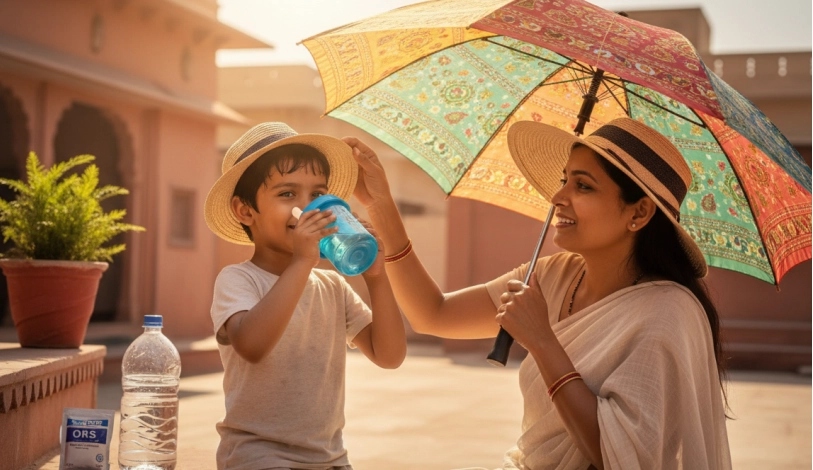
Heat Exhaustion and Heat Stroke
These are less common but more serious. Heat exhaustion happens when the body overheats and starts struggling to cool itself. The child will look flushed, sweat heavily, complain of headache or nausea, and feel weak or dizzy.
Left unaddressed, this can progress to heatstroke, where the body temperature rises dangerously high and the child may stop sweating entirely despite the heat. This is a medical emergency. Move the child to a cool environment, cool them down with wet cloths, and get to a pediatric hospital near me without delay.
The important thing to know is that heat stroke can develop faster in children than adults, and it can happen even when a child doesn't seem to be overexerting themselves.
Stomach Infections
Bacteria multiply much faster in warm temperatures. Food that would be fine sitting out for an hour in January becomes a risk within 20 minutes in peak summer heat. Children who eat outside food, street snacks, or anything stored improperly are particularly vulnerable.
Stomach infections typically show up as vomiting, diarrhoea, stomach cramping, and complete loss of appetite. They're among the most common summer diseases in children and also the most avoidable with basic precautions. The bigger concern with stomach infections is the dehydration they cause, particularly in younger children who can deteriorate quickly.
Skin Rashes and Heat-Related Irritation
Prolonged sweating blocks sweat glands and causes small, itchy red bumps commonly called 'prickly heat'. It appears most often on the neck, back, and underarms. While not serious, it's uncomfortable enough to make a child miserable and scratch constantly, which can lead to skin infections if not kept clean.
Loose cotton clothing, cool baths, and keeping the skin dry goes a long way. Tight or synthetic fabrics make it significantly worse.
Prevention That Actually Works
Keep Fluids Going Constantly
Don't wait for your child to ask for water. Build it into the routine a glass before going outside, regular breaks and something to drink with every meal and snack. Water is best, but coconut water, fresh lime water, and homemade electrolyte drinks all help. Cold sugary drinks actually worsen dehydration, so those don't count.
Staying on top of hydration is the single most effective of all kids' health tips for summer it prevents dehydration directly and reduces the severity of heat exhaustion.
Keep the Hours Sensible
The heat between noon and 4 PM is genuinely dangerous for sustained outdoor activity. If children are playing outside, early morning or late evening is far safer. For unavoidable outings during peak hours, hats, light cotton clothing, sunscreen, and frequent shade breaks are non-negotiable.
Take Hygiene Seriously
Handwashing before meals, avoiding shared water bottles, and steering clear of uncovered street food during peak summer these habits prevent the majority of stomach infections. They're simple, but they only work if they're consistent, not just occasional.
Know When to See a Doctor
Some symptoms warrant a call or visit rather than home management. Persistent fever beyond two days, signs of severe Dehydration In Kids Symptoms, a child who seems unusually confused or unresponsive, or Summer Diseases In children that don't improve with basic care, all of these need proper child fever treatment or medical review rather than a wait and see approach.
Finding a trusted pediatric hospital near you before you actually need one in a hurry is genuinely useful preparation.
Conclusion
Summer illness in children is common, predictable, and largely preventable. Stay ahead of hydration, limit heat exposure during the worst hours, maintain food hygiene, and know the warning signs that mean it's time to see a doctor rather than manage at home.
A healthy summer doesn't require much, just consistent attention to the basics and the willingness to act quickly when something doesn't look right.