
Recurring Fever in Children — What's Really Behind It and When to Stop Waiting
28 May, 2026
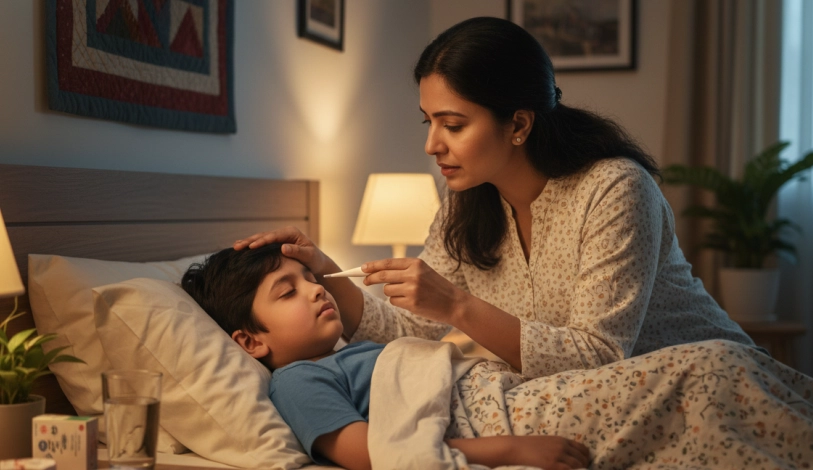
Most parents develop a rhythm with childhood fever after the first few episodes. Temperature up, fluids in, rest enforced, and wait it out. That rhythm works fine when fever comes and goes cleanly. It stops working when the fever keeps coming back when you're barely two weeks past the last episode and the thermometer is climbing again.
Frequent fever deserves more than repetition of the same home routine. It deserves an actual explanation. Here's what the most common child fever causes look like in practice, what good home management involves, and which signs mean you stop waiting and call someone.
Why Fever Happens in the First Place
Understanding fever as a mechanism rather than a symptom changes how parents respond to it. The body raises its core temperature deliberately when it detects an infection most bacteria and viruses are temperature sensitive, and a higher internal environment makes it harder for them to replicate. The fever is not the problem. It is the response to the problem.
For children, a temperature reading above 100.4°F marks the clinical threshold. But experienced parents quickly learn that the number matters less than the child's overall presentation. A child with a 102°F reading who is alert, talking, and sipping fluids is in a meaningfully different situation from one with the same number who won't open their eyes and has had nothing to drink in eight hours.
The thermometer gives you one data point. The child in front of you gives you the rest.
What's Usually Behind It
Viral Infections
The single most common explanation for frequent childhood fever is repeated viral infection, and in young children, this is often completely expected rather than alarming.
Children in schools, nurseries, or joint family settings encounter new viruses on a near-constant basis. Each encounter either produces immunity or produces illness, often both, in sequence. Colds, flu, viral throat infections, and the dozens of unnamed bugs that circulate seasonally all trigger fever as a routine immune response. The fever typically rises. peaks within a day or two and resolves within three to five days as the body clears the infection.
Proper fever treatment for kids in these situations is supportive adequate fluids, rest, light clothing, and comfort, not antibiotic-driven. Viral fever does not respond to antibiotics, and using them unnecessarily creates its own problems over time.
Bacterial Infections
Bacterial infections follow a different pattern. Ear infections, strep throat, urinary tract infections, and certain chest infections all cause fever, but they don't resolve on their own the way viral infections typically do. They need antibiotics the right ones, at the right dose, for the right duration.
The patterns to recognise are fever that lingers past the three to four day mark without genuine improvement, fever that returns after appearing to settle, or fever accompanied by specific complaints like significant ear pain, painful swallowing, or burning during urination. These are not typical viral presentations, and they need proper assessment from a baby fever doctor in Jaipur rather than another round of home management and waiting.
Getting the diagnosis right matters here in both directions. Bacterial infections need treatment, and viral infections don't need the treatment that bacterial ones do.
Seasonal Susceptibility
India's seasonal transitions bring predictable spikes in childhood fever. Monsoon and winter in particular see sharp increases in the circulation of respiratory viruses, partly because children spend more time indoors and in closer contact with each other.
A child who gets a fever every monsoon season isn't necessarily immunocompromised. They may simply be in a high exposure environment at the exact time when infections are most actively spreading. That said, if seasonal episodes are consistently severe, prolonged, or accompanied by complications, a visit to a trusted Kids Health Clinic in Jaipur helps clarify whether routine susceptibility or something more specific is at play.
Teething
Teething produces mild temperature elevation not high fever. As teeth push through gum tissue, local inflammation can cause a slight rise, typically below 100.4°F, accompanied by the familiar signs of drooling, irritability, and compulsive chewing.
The mistake to avoid is attributing any fever in a teething baby entirely to teething. Genuine high fever in an infant who is also teething has another cause. A Pediatrician Near Jaipur can assess this quickly and ensure nothing is being missed while attention is focused on the visible teeth.
Post-Vaccination Response
Low-grade fever in the 24 to 48 hours following vaccination is a normal and expected immune response. The vaccine has prompted the body to begin building protection the mild fever is evidence of that process, not a complication of it.
Following the Fever Treatment For Kids guidance your pediatrician provides after each vaccination appointment handles this well. The fever resolves on its own within two days in the overwhelming majority of cases.
The Signs That Change Everything
Most childhood fevers are manageable at home. These specific signs are different they mean to contact a baby fever doctor in Jaipur the same day rather than waiting for morning or the next available appointment.
Fever that crosses 103°F needs professional assessment. Fever that has run for more than three days without real improvement does too. A child who has a seizure needs emergency care immediately. Breathing that is visibly laboured, noisy, or significantly faster than normal warrants urgent attention. A child who is extremely difficult to wake or who seems confused needs to be seen right away. Dehydration, dry mouth, no urination for many hours, and sunken eyes require medical management, not just more fluids at home.
What Good Home Management Actually Looks Like
When warning signs are absent, effective fever treatment for kids keeps the child comfortable while the immune system works. Fluids come first water, diluted juice, or oral rehydration solution depending on the child's age and what they'll accept. Light clothing rather than layering. A lukewarm sponge if the temperature needs to come down gently. Rest above all else a feverish child who wants to sleep should be allowed to.
Medication should be based on a doctor's specific recommendation for that child's weight and age. The dose that is safe for a seven-year-old is not the dose that is safe for a two-year-old. Guessing this is not acceptable.
Building the Habit of Prevention
Handwashing before meals and after school remains the most consistently effective tool for reducing viral transmission. Nutritious food, adequate sleep, and current vaccinations all support immune function in ways that accumulate over time.
Scheduling routine visits with a pediatrician near Jaipur, not just sick visits, allows a doctor to track patterns across multiple illness episodes. A doctor who sees the same child repeatedly has context that a first-time examiner never does. They notice when a pattern of recurring ear infections suggests something worth addressing structurally. They recognise when frequent severe fever doesn't fit the profile of normal childhood susceptibility. That continuity of care has real diagnostic value that one-off consultations cannot replicate.
What It Comes Down To
Fever is a normal, functional part of childhood immune development. Most child fever reasons are manageable and predictable and resolve with appropriate care. The skill parents develop over time is recognising the difference between a fever that needs support and a fever that needs investigation.
Know when to manage at home. Know when to call a baby fever doctor. Know where your nearest Kids Health Clinic in Jaipur is before you urgently need it. And build a relationship with a pediatrician near you who knows your child well enough to read the pattern, not just the episode.