
Breathing Difficulty in Children: Signs That Need Immediate Care
30 Mar, 2026
Introduction
Ask any parent what keeps them up at night, and a child struggling to breathe will always make that list. Children live entirely in the present; they run and tumble and rarely think to tell you when something feels wrong inside their chest. Breathing difficulty in children does not always arrive the way parents expect it to. It can hide behind what looks like an ordinary cold for days before revealing how serious it has become. A parent who understands the warning signs is always in a stronger position than one who is seeing them for the very first time.
Common Causes of Breathing Problems in Kids
Breathing problems in children rarely appear without reason. Something is almost always driving them, and identifying that cause early changes the entire shape of what comes next.
Child respiratory illness leads the list by a considerable margin. Common infections – seasonal colds, influenza, bronchitis, and pneumonia – swell and narrow the airways until breathing demands real effort. Asthma catches many families off guard, often going undiagnosed for years while the child simply struggles through each episode. Airways tighten without warning, bringing chest heaviness; a cough that returns every night; and wheezing in kids – that low, hollow whistling sound on every exhale that lodges itself permanently in a parent's memory.
Allergies from dust, pollen, animal dander, and mould build slowly, creating breathing difficulty that is easy to overlook until it becomes impossible to ignore. Bronchiolitis targets infants with particular severity, inflaming the tiniest airways deep within the lungs. Toddlers carry their own set of risks: coins, toy pieces, and small food particles that vanish into the airway in one careless, unguarded moment.
Signs and Symptoms Parents Should Watch
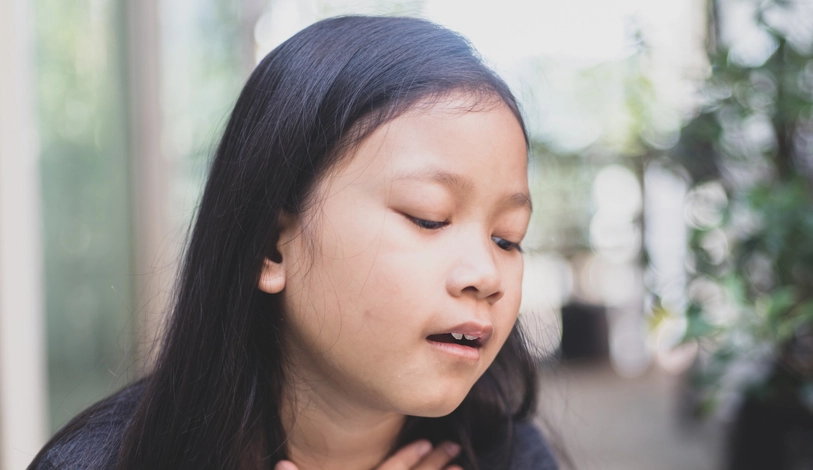
Children signal distress in ways that are genuinely easy to miss during a full and busy day. Watch for breathing that has shifted from normal, either noticeably faster or slower than usual. Listen carefully for wheezing in a child on the exhale – a sound that has no place in a healthy set of lungs. A cough that refuses to clear, nostrils flaring wide with each breath, and the soft tissue between the ribs visibly sinking inward while breathing are all signs worth taking seriously. Bluish or pale lips, a child who has gone unusually still, and difficulty completing a single sentence without stopping for air all indicate that professional medical attention is needed without delay.
When Breathing Difficulty Becomes an Emergency
There are moments that allow no room for hesitation whatsoever. Head directly to emergency care if your child is visibly fighting for each breath, lips and face are turning pale or blue, crying produces no sound, there is severe gasping that is worsening rapidly, or alertness is fading in and out. Breathing issues in children appearing alongside a climbing fever makes every second that passes more significant.
Severe asthma, advanced pneumonia, and child respiratory infections can deteriorate with a speed that catches even experienced parents completely off guard. This is never the moment to wait and watch.
Diagnosis and Medical Tests
The pediatrician will examine the chest immediately, assess airflow, and check oxygen saturation on arrival. A chest X-ray identifies pneumonia or obstruction. Blood tests separate bacterial causes from viral ones. Pulse oximetry monitors oxygen levels in real time throughout the visit. Where asthma is suspected, lung function testing adds important detail. An accurate diagnosis from the outset prevents days of treatment that misses the actual problem entirely.
Treatment Options
Treatment for breathing difficulty in kids is built precisely around the underlying cause. Bronchodilators and inhalers restore airflow quickly. Confirmed bacterial child respiratory illness demands a complete antibiotic course without interruption. Nebulisers carry medicine directly into the lungs, reducing inflammation and relieving wheezing in kids more effectively than any tablet. Dangerously low oxygen levels require supplemental oxygen without delay. Severe or complex presentations need hospital admission with continuous specialist oversight.
Families seeking expert care from the very first visit should choose the best pediatric hospital in Jaipur for breathing problems, where accurate diagnosis and targeted treatment are available under one roof.
Prevention Tips
Vaccinations remain the single most reliable defence against serious child respiratory disease. Regular handwashing, clean air at home, careful allergen management, balanced nutrition, and keeping small objects away from young children all make a real and measurable difference. Routine pediatric check-ups catch developing problems before they grow into serious ones.
When to Visit a Pediatrician
Book an appointment without delay if your child shows recurring shortness of breath, breathing trouble lasting for more than a few hours, fever combined with respiratory symptoms, or repeated episodes of childhood respiratory illness. For symptoms that return persistently despite treatment, a pediatric hospital for breathing problems provides the specialist depth these cases genuinely call for.
Conclusion
Breathing problems in children should never be quietly observed and hoped away. Recognizing wheezing, a cough that lingers, and early signals of a child's respiratory infection while there is still comfortable time to respond separates a straightforward recovery from a prolonged and difficult one. Stay observant, act without delay, and trust the experienced specialists at the best pediatric hospital in Jaipur for breathing problems to give your child every possible advantage on the road back to full health.