
NICU Explained: Why Some Newborns Need Special Care
31 Mar, 2026
Introduction
Nobody walks into a delivery room expecting bad news. Parents spend nine months dreaming about that first hold, that first cry, that first look at a face they already love. And for most families, that is precisely what they get. But occasionally, life has other plans. A baby arrives six weeks early. Or far too small. Or with a complication the scans never caught. Suddenly the room changes, and so does everything else. The neonatal intensive care unit is where those babies go not because something has gone terribly wrong, but because something very specific and very manageable needs the right hands around it immediately.
Knowing what the NICU actually does transforms one of the scariest moments in a parent's life into something they can begin to understand.
What Happens Inside the NICU?
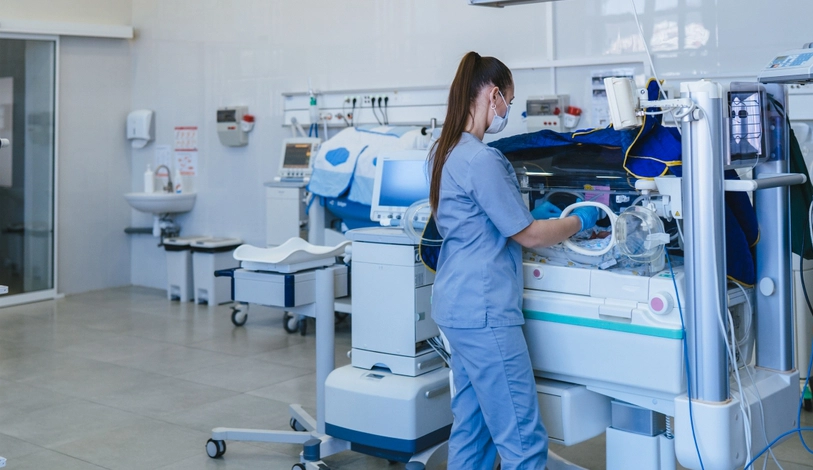
Walk into a NICU and the first thing you notice is how quietly purposeful everything is. Machines track breathing, heart rate, oxygen levels, and body temperature without stopping. Nurses move with a calm that comes from knowing exactly what each reading means and exactly what to do about it.
The treatment includes the environment itself. Temperature is held steady. Lighting is kept gentle. Hygiene standards are strict. Incubators provide the warmth that the smallest babies cannot yet produce on their own. Ventilators breathe on behalf of lungs that are not ready to do the job alone. Feeding tubes send food deep enough for babies who haven't learned how to swallow yet.
The best NICU hospital in Jaipur does not simply have the equipment it has the people who know how to use it with the kind of precision that changes outcomes for the smallest and most fragile patients.
Which Babies End Up in the NICU?
The neonatal intensive care unit sees babies from very different starting points, but the common thread is always the same: they need more support than a standard postnatal ward can safely provide.
Premature infant care - It is the most frequent reason for admission. Born before 37 weeks, these babies carry systems that simply have not finished building yet. Lungs that flutter rather than breathe. A gut that cannot digest. An immune system offering almost no defence. The NICU wraps those unfinished systems in everything they need to complete their development safely on the outside.
Low birth weight - It covers infants who arrive below a healthy weight, regardless of how many weeks they spent growing. Keeping warm, feeding enough, and staying free from infection are battles these babies fight from their very first day. Getting the support right in that early window matters more than most people realise.
Beyond prematurity and weight, babies dealing with breathing emergencies, serious infections, difficult deliveries, or conditions present from birth all find their way to the NICU when standard care is simply not enough.
What Treatment Looks Like
Inside, every decision balances two things what the baby needs right now and what will make them stronger tomorrow.
Oxygen therapy and ventilator support carry fragile lungs through the final stretch of development that birth interrupted too soon. This sits at the very heart of premature infant care from day one. Feeding through tubes or directly into the bloodstream keeps nutrition consistent until babies grow strong enough to manage on their own. Incubators handle the temperature regulation that low birth weight babies cannot do without. And through all of it, every number on every screen is watched, questioned, and adjusted by people who have done this thousands of times.
The People Who Make It Work
NICU care runs on a team that never really clocks off. Neonatologists carry the clinical decisions. Nurses handle everything else: the watching, the administering, the explaining, and the quiet reassurance that parents desperately need at two in the morning.
Respiratory therapists and nutrition specialists each fill gaps that nobody else can.
Before any baby goes home, that team makes sure the parents are ready too: feeds, hygiene, warning signs, and follow-up dates. Leaving the best NICU hospital in Jaipur is a day worth marking on a calendar.
When Parents Feel Lost
A baby in the NICU does something to a parent that is hard to put into words. The hospitals that understand this keep families close, skin against skin when possible; hands in the incubator when not; and honest conversations at every turn. Involvement is not just encouraged; it is part of how babies actually get better.
Conclusion
Some babies simply need more than the world is immediately ready to give them. Whether that means premature baby care, care for low birth weight babies, or urgent help for something nobody anticipated, the NICU meets that need without hesitation. The experts at a well-known NICU hospital in Jaipur have handled a lot of serious cases, and they know exactly what to do.