
Allergies in Children: Causes, Symptoms & Treatment in Jaipur
30 Apr, 2026
Child allergy symptoms in Jaipur are not the same in every child. One child eats eggs and gets hives within minutes. Another spends an afternoon in the park and comes home with swollen eyes and a blocked nose. Same city, same weather, completely different reactions. Most parents spend months thinking it is a recurring cold or a skin infection before someone finally mentions the word allergy.
The signs are there, but they are easy to miss. Skin that stays itchy or red well after a meal or a day spent outside. Eyes that water on and off without a fever or cold to explain them. A runny nose that drags on for weeks at a stretch. A cough that gets worse once the child lies down at night or after they have been running around outdoors. Stomach pain and loose stools that always seem to follow the same meal. Puffiness around the eyes or lips that appears out of nowhere. None of this is random these things follow a pattern, and that pattern usually points to one specific cause.
Kids' skin allergy in Jaipur flare ups happen most often when seasons shift. The skin weakens when temperatures change and pollen fills the air. A rash that keeps coming back with no infection behind it is not some mysterious condition the body is reacting to something it keeps encountering. Treating it as a skin infection over and over just pushes the real answer further away.
If a child's throat starts swelling fast, they struggle to breathe, or they go pale and limp after eating or touching something, do not wait. That is anaphylaxis. It is not common, but it is serious, and it needs emergency care right then.
What Is Actually Causing It
The trigger is the whole problem. If a family is avoiding the wrong thing while the child keeps running into the actual cause, nothing gets better. A lot of parents try cutting out food after food or stopping outdoor trips, all without ever confirming what the body is actually reacting to.
Dust mites are a big one in Jaipur homes. They live deep inside mattresses, sofas, pillows, and thick rugs. Most families have no idea how significant this is until a test confirms it. Pollen hits harder in certain months, and children who are sensitive to it have a genuinely rough time during those weeks. Pet dander is another one that surprises people it is not the animal's fur causing the reaction, it is proteins from the skin and saliva, which cling to furniture, clothes, and walls long after the pet has left.
When it comes to food, milk, eggs, peanuts, tree nuts, wheat, and fish are behind most reactions seen in children. Jaipur's air pollution does not help. It does not create the allergy, but it makes breathing symptoms measurably worse for children who already have them. Once the monsoon arrives, mould builds up in damp corners of the home and becomes a real problem for some children.
Trying to work through all of this at once, without any testing, wastes months and rarely leads to the right answer.
Diagnosis and Treatment
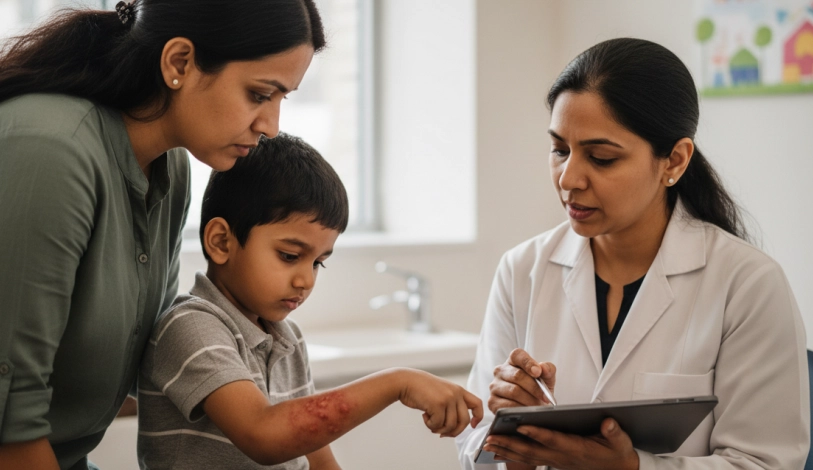
Child allergy treatment in Jaipur that begins without knowing the trigger is just managing how the child feels on certain days it is not fixing anything. A skin prick test or a specific IgE blood test tells you exactly what the immune system is reacting to. Once that is known, treatment actually makes sense.
Three things happen after the trigger is confirmed.
Avoidance: For dust mites, this means putting protective covers on mattresses and pillows, washing all bedding at 60°C every week, and clearing out thick rugs or heavy curtains that collect particles. For food allergies, it means reading the ingredient label every single time, not guessing, not going by memory from a previous purchase.
Medication: Antihistamines work well for mild to moderate reactions. Skin symptoms are treated with topical medication. Breathing problems linked to allergies are managed with inhaled treatment. The medicine chosen depends on what the child actually experiences it is not the same prescription handed to every child who walks in.
Immunotherapy: when avoidance and medicine together are still not enough. Small amounts of the allergen are introduced to the body repeatedly over time, under medical supervision. It takes months and sometimes longer. But for children who need it, it genuinely reduces how badly the immune system overreacts sometimes by a significant amount.
A proper allergy doctor in Jaipur walks families through all of this properly, which is a very different experience from reading general advice online that fits no child in particular.
What Families Can Do Between Appointments
The clinic visit is a few hours. Everything else is the rest of the year. What happens at home day to day is what actually determines whether the child's symptoms stay manageable or keep spiralling.
Use a damp cloth to wipe surfaces, not a dry one. Dry dusting throws allergens back into the air the child is breathing. Wash bedding at 60°C every week when symptoms are bad. Keep windows closed in the early morning hours during high-pollen months that is when outdoor levels are at their worst. When the child comes back inside from playing outside, wash their face and hands before they settle in. For food allergies, check the label every single time without exception. Product ingredients change quietly, and one assumption is enough for a reaction to happen.
Write things down. Keep a basic diary of what the child ate, where they went, what symptoms appeared and when. Patterns come up faster than most parents expect, and having that record makes the next appointment far more useful.
Seeing a pediatric allergy specialist in Jaipur regularly matters because children are not static. Their weight changes, their immune system develops, they move to new environments and the plan has to keep up with all of that.
Most children do not simply grow out of allergies on their own. The ones who manage well are the ones whose families found the right trigger, built a real plan around it, and stayed with it through the seasons.