
Best Vaccination Schedule for Babies in India (2026 Guide)
27 Jun, 2026
Following the correct baby vaccination balanced chart is one of the most important things new parents can do not for paperwork, but to time protection precisely when a baby's immune system is most vulnerable. The newborn vaccine chart in India, recommended by the Indian Academy of Pediatrics, is structured carefully for 2026 to reflect current disease patterns and vaccine availability.
Why Does the Vaccination Timeline for Babies in India Matter?
Newborns carry some maternal antibodies at birth, but these fade within months. Vaccines fill the gap by training the immune system to recognise specific pathogens without exposing the child to active disease. The baby vaccination schedule covers tuberculosis, hepatitis B, polio, diphtheria, tetanus, whooping cough, rotavirus, measles, mumps, rubella, chickenpox, and pneumococcal disease.
Several of these can cause permanent disability or death in infants not theoretical risks, but documented outcomes in unvaccinated children. Each vaccine has an optimal age window for maximum effectiveness. Staggering doses allows the immune system to mount a proper response to each one.
Recommended Vaccination Schedule for Babies in India 2026
| Age | Vaccines |
|---|---|
| At Birth | BCG, OPV (Oral Polio Vaccine), Hepatitis B |
| 6 Weeks | DTP, IPV, Hib, Rotavirus, Pneumococcal |
| 10 Weeks | Second doses of 6-week vaccines |
| 14 Weeks | Third doses of 6-week vaccines |
| 6 Months | Influenza vaccine |
| 9 Months | MMR, Typhoid conjugate vaccine |
| 12–15 Months | Chickenpox, Hepatitis A, Boosters as advised |
A pediatric vaccination clinic will adjust timing based on a child's birth weight, prematurity, or prior illness. These adjustments are normal and do not mean the schedule is being abandoned.
What Are the Benefits of Following the Right Vaccination Schedule?
Stronger Immunity at the Right Time
Vaccine timing is not arbitrary. Whooping cough and rotavirus are most dangerous in the first months of life, which is why DTP and rotavirus vaccines begin at six weeks rather than later. Giving a vaccine too early or too late relative to immune system development reduces its effectiveness.
Prevention of Diseases That Are Still Circulating
Some parents assume measles or polio are no longer threats in India. Outbreaks occur regularly in areas with low vaccination coverage. These diseases are rare in well-vaccinated communities precisely because vaccination is consistent not because the pathogens have disappeared.
Community Protection
Newborns too young to be vaccinated and children who cannot receive vaccines for medical reasons are protected when the community around them maintains high coverage. Choosing not to vaccinate on time reduces that protection for others—it is not a purely individual decision.
What to Expect at a Vaccination Clinic Visit
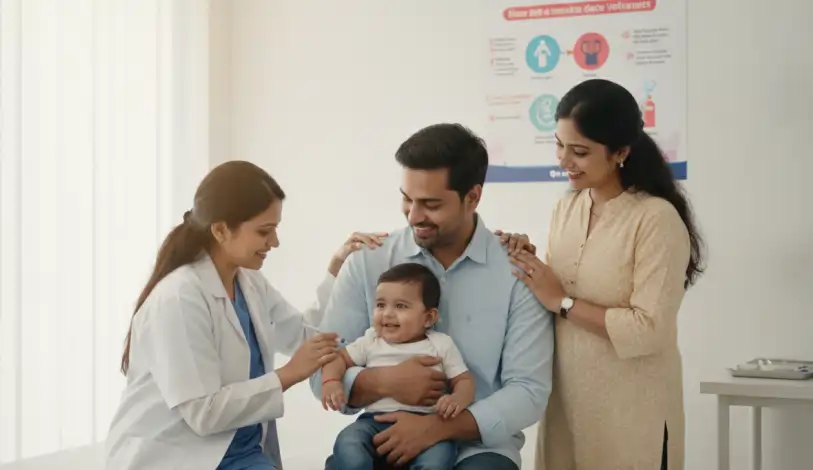
- Pre-vaccination assessment — the paediatrician checks whether the child is currently unwell, whether any prior vaccine caused an unusual reaction, and whether dose timing is correct.
- Administration — most vaccines are given as injections in the thigh for infants. Oral polio and rotavirus vaccines are drops.
- Normal side effects — low fever, fussiness, redness at the injection site, and increased sleepiness. These resolve within1–2days and indicate the immune system is responding normally.
- Waiting time — clinics ask parents to wait 15–20 minutes after vaccination. Serious allergic reactions are extremely rare but are manageable at the clinic.
- Record maintenance — an immunisation card should be started at birth and updated at every visit. Many child vaccination services in Jaipur provide digital reminders to track upcoming doses.
Conclusion
The baby vaccination plan is one of the most evidence-backed tools in pediatric preventive care. Following it consistently, maintaining proper records, and attending a qualified pediatric vaccination clinic for each dose removes most of the uncertainty parents feel about immunisation. The diseases on the schedule are preventable. The vaccines are safe. The timing matters. Getting it right from birth is the single most impactful preventive investment a parent can make.