
Common Eye Problems in Children: When Should Parents Visit a Specialist?
13 Aug, 2026
Children rarely complain about blurry vision the way adults do. Instead, they squint, sit too close to the television, or simply stop enjoying reading and no one realises why until a school vision screening flags it. Recognising Eye Problems in Children early can prevent years of struggle in the classroom.
Many parents are unsure exactly When should I take my child to an eye doctor?, often waiting until a problem becomes obvious rather than catching it in its early, easily treatable stage.
Why Children's Eye Problems Often Go Unnoticed
Young children have no reference point for "normal" vision, so they rarely mention that something looks blurry or doubled. A child who has had poor eyesight since birth simply assumes everyone sees the world the same way they do.
This is why teachers and parents often notice behavioural clues before the child mentions any eye discomfort, such as reluctance to read, poor handwriting, or avoiding outdoor games that involve tracking a ball.
Common Vision Problems Seen in Children
Refractive errors such as myopia, hypermetropia and astigmatism are the most frequent Child Vision Problems, often first noticed around school age when close-up or distance work becomes demanding. Squint, or misalignment of the eyes, is another condition that is far easier to correct when caught early in childhood.
Lazy eye, known medically as amblyopia, develops when one eye is weaker and the brain begins to favour the stronger eye, which can cause permanent vision loss if untreated beyond a certain age. Frequent eye rubbing, redness, or watering can also point to allergic conjunctivitis, which is common in Jaipur's dusty climate.
Warning Signs Parents Should Watch For
A few everyday signals are worth acting on quickly, since they often indicate a proper Pediatric Eye Checkup is overdue:
- Sitting unusually close to the television or holding books very near the face
- Frequent headaches after screen time or reading
- One eye drifting outward or inward, or consistently tilting the head to one side
- Difficulty recognising faces from a distance
- Poor performance copying from the blackboard, or a teacher's note about board vision
Why Early Detection Matters So Much
A child's visual system develops rapidly until around age seven or eight, and many conditions like lazy eye or squint respond far better to treatment during this window. Left unchecked, these problems can become permanent, affecting not just vision but confidence, academic performance and social participation.
Routine screening, ideally once a year even without obvious symptoms, catches problems long before a child would think to mention them.
Getting the Right Care in Jaipur
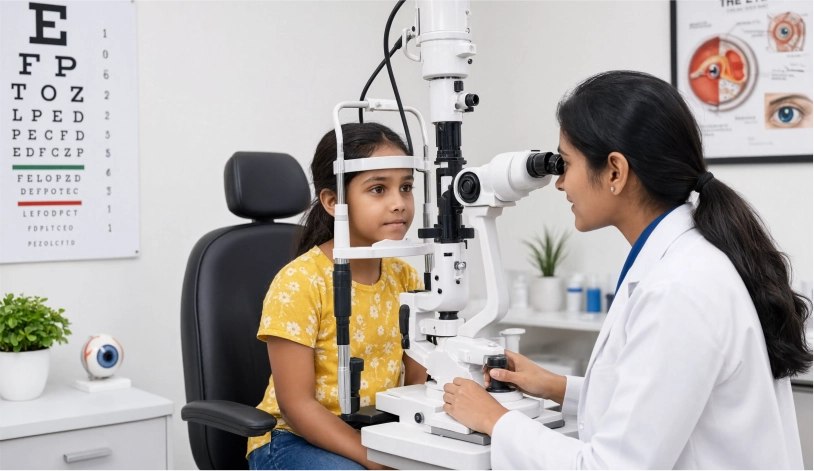
A basic school screening is useful but not a substitute for a full pediatric eye examination, which checks for refractive errors, alignment, and overall eye health using tools appropriate for young patients. Families searching for the Best Eye Hospital in Jaipur should look for a centre experienced specifically in children's eye care, since examining a young child requires patience and child-friendly techniques.
At Neo Clinic, pediatric eye evaluations are built into routine child health check-ups, making it easier for parents to catch vision issues alongside other growth and development milestones rather than as a separate, easily forgotten task.
Screen Time and Its Effect on Children's Eyes
With online classes, tablets and television now a routine part of most children's days, prolonged near-focus screen use has become a genuine contributor to eye strain and, in some cases, faster progression of myopia. Children rarely blink as often while engrossed in a screen, which leaves eyes drier and more fatigued by the end of the day.
A simple rule like staring at something twenty feet away for twenty seconds every twenty minutes of screen time greatly reduces strain. In addition to regular professional screenings, healthy vision as children grow is further enhanced by adequate room lighting, holding devices at proper distance and including outdoor playtime into each day. Research also indicates that spending time outdoors in natural light may help to slow the progression of myopia, giving parents one more practical reason to balance screen-based learning with outdoor play.
Conclusion
Children’s eyes change quickly and small problems that go unnoticed today can impact how a child learns, plays and grows in confidence tomorrow. A simple yearly eye checkup can find most problems when they are still easily treatable. Neo Clinic’s pediatric eye specialists in Jaipur are trained to make young children comfortable during the examination, making early detection a stress-free part of your child’s regular health routine.