
Is Your Child's Height Normal? Understanding Growth Charts for Parents
22 Aug, 2026
Comparing children's heights at family gatherings is almost a national pastime, and it often leaves parents quietly worried if their child seems shorter than cousins or classmates. The question that follows is usually the same: Is my child's height normal?
The most reliable way to answer this isn't comparison with other children at all, but tracking growth using a proper Child Growth Chart over time, which reveals far more than a single height measurement ever can.
Why a Single Height Measurement Isn't Enough
Children naturally come in a wide range of heights depending on genetics, and a child on the shorter end of a healthy range is not automatically a cause for concern. What matters far more is the pattern of growth over months and years, not how a child compares to a neighbour's child of the same age.
A growth chart plots a child's height and weight against standardised percentile curves, allowing a pediatrician to see whether a child is growing consistently along their own curve, which is usually the strongest sign of healthy Height Growth in Children.
How to Read a Growth Chart Simply
Each percentile line on the chart represents where a child stands compared to others of the same age and sex; for example, being on the 25th percentile simply means the child is taller than 25 percent of peers, which is entirely normal on its own.
The real red flag isn't a low percentile but a child crossing downward across multiple percentile lines over time, such as dropping from the 50th to the 10th percentile within a year, since this pattern can indicate an underlying issue affecting growth.
Common Causes of Growth Concerns
Genetics remains the single biggest factor in a child's eventual height, and comparing parental heights often explains a large part of the picture. Nutritional gaps, particularly in protein, calcium and vitamin D, can slow growth even in otherwise healthy children, especially with today's diets heavy in processed snacks.
Less commonly, hormonal factors, chronic illness, or delayed puberty can affect growth and require specialised evaluation. These Child Growth Problems are usually identified through careful chart tracking rather than a single check-up, which is why regular measurements matter more than occasional ones.
What Parents Can Do at Home
Most children like steady growth with a few good habits:
● Aim for between eight and eleven hours of sleep, as growth hormone is primarily released during deep sleep.
● High Protein and Calcium diet: Milk, dal, eggs and green vegetables
● Promote outdoor play for natural sunlight and bone health
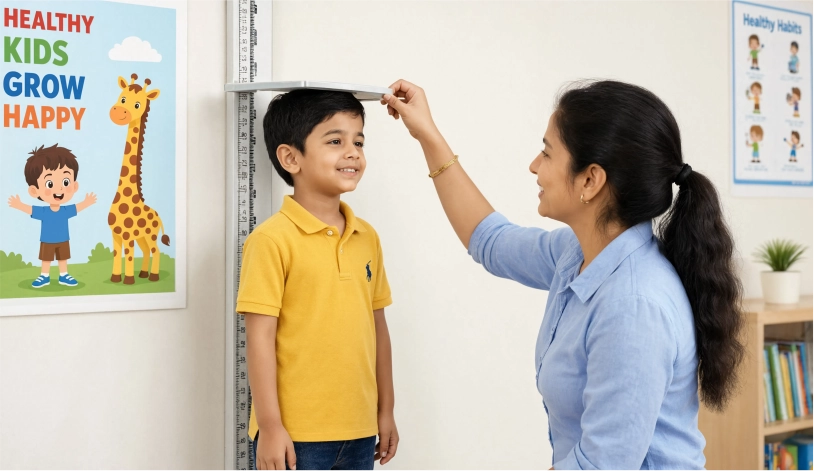
● Measure height every 6 months and chart it on a home growth chart
When to Seek a Specialist
If the child continues to drop down the curve, the height is significantly below the normal range for age or puberty appears very early or late, then the next step is to visit the Pediatric Endocrinologist in Jaipur.
Where necessary a specialist can request appropriate tests such as bone age assessment and hormone levels to identify treatable causes early. Recognizing growth problems in the right window can make a difference in a child's ultimate adult height.
Genetics vs Environment: What Weighs More?
Parents often assume height is almost entirely inherited, and while genetics does set a general range, nutrition, sleep and overall health during childhood determine how close a child comes to reaching that genetic potential. Two children with similar family heights can end up quite different in stature if one experiences chronic nutritional gaps or repeated illness during key growth years.
This is precisely why growth charts matter more than parental comparison alone. A child steadily tracking along their expected curve, supported by good nutrition and regular health checks, is generally making the most of whatever genetic potential they carry, regardless of how tall or short that range happens to be. Parents can even estimate a rough target height range at home using both parents' heights, though this is only ever a broad guide and never a substitute for professional growth tracking over time.
Conclusion
Height is one of the most visible parts of a child's growth, but it should be tracked with patience and proper charts rather than casual comparisons. Most children are growing exactly as they should be. When a pattern does raise questions, Neo Clinic's pediatric team in Jaipur offers thorough growth assessments to give parents clear, medically sound answers.