
Frequent Nosebleeds in Children: Causes, Home Care & When to Worry
31 Aug, 2026
A sudden nosebleed can look far more alarming than it usually is, especially when it happens to a young child in the middle of play or sleep. Most parents' first instinct is panic, quickly followed by the practical question: Why does my child get nosebleeds?
The good news is that Nosebleeds in Children are usually harmless and easy to manage at home, though understanding the common causes helps parents respond calmly and recognise the rare cases that need prompt medical attention.
Why Nosebleeds Are So Common in Childhood
Children have delicate blood vessels close to the surface inside the nose, particularly in a small area called Little's area, which makes them prone to bleeding from relatively minor triggers. Dry air, especially during Jaipur's hot summers or heated winter rooms, dries out the nasal lining and increases fragility.
Frequent nose picking, a very common childhood habit, along with rough nose blowing during colds, are among the most frequent everyday causes behind recurring nosebleeds.
Other Common Causes to Be Aware Of
Seasonal allergies causing frequent sneezing and nasal irritation, minor injuries from play or accidental bumps, and colds or sinus infections that inflame the nasal lining all contribute to occasional bleeding. Dry indoor air from air conditioning or heaters can also be a quiet but significant contributor many parents overlook.
Less commonly, a deviated nasal structure or, rarely, an underlying blood clotting issue can cause more frequent or harder-to-control bleeding, which is why a pattern of frequent nosebleeds should never be dismissed entirely as normal without at least one medical opinion.
Home Care During a Nosebleed
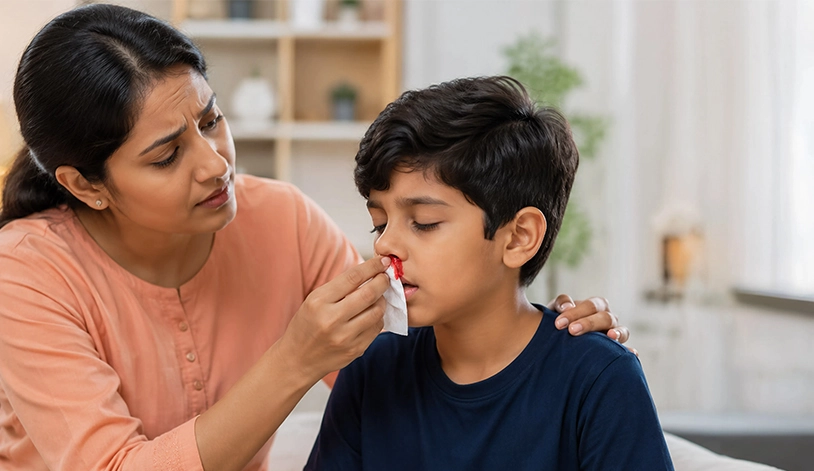
A few simple steps stop most nosebleeds effectively:
- Sit the child upright and lean slightly forward, rather than tilting the head back
- Pinch the soft part of the nose firmly for a full ten minutes without releasing early
- Have the child breathe through the mouth while pressure is applied
- Apply a cold compress on the bridge of the nose to help constrict blood vessels
- Avoid nose blowing or picking for several hours after bleeding stops
Warning Signs That Need Immediate Attention
A nosebleed that continues beyond twenty minutes despite proper pressure, unusually heavy bleeding, bleeding accompanied by dizziness or paleness, or frequent nosebleeds occurring several times a week are among the Common Childhood Problems that warrant closer medical evaluation rather than repeated home management alone.
Nosebleeds following a head injury, or occurring alongside unusual bruising elsewhere on the body, should be treated as urgent and assessed promptly rather than waiting to see if they resolve on their own.
When to Visit Pediatric Emergency Care
If the bleeding does not stop after two attempts at proper first aid, or if the child seems unusually weak, pale or breathless during or after a nosebleed, then it is safer to seek Pediatric Emergency Jaipur services promptly rather than continue with home management.
Doctors are able to identify and treat underlying causes such as recurrent bleeding from Little’s area with simple in-clinic procedures or investigate further if a bleeding disorder is suspected, giving parents clarity and an appropriate long-term management plan.
How Allergies Contribute to Nosebleeds
Children with seasonal or dust allergies often experience more frequent nosebleeds than others, since constant sneezing, nasal congestion and rubbing irritate the delicate blood vessels inside the nose over time. Managing the underlying allergy, through simple measures like reducing dust exposure at home and using paediatrician-approved nasal sprays when needed, often reduces nosebleed frequency as a helpful side effect.
A humidifier in the child's room during particularly dry months can also ease nasal irritation linked to both allergies and dryness, addressing two common nosebleed triggers at once. Applying a thin layer of a pediatrician-approved nasal moisturizer before bedtime can offer further relief for children prone to repeated dryness-related bleeding.
Conclusion
Most nosebleeds in children look worse than they actually are and settle quickly with correct first aid at home. Staying calm, applying the right technique, and knowing which warning signs matter makes all the difference for parents facing this common childhood moment. When a nosebleed does not follow the usual pattern, Neo Clinic's pediatric emergency team in Jaipur is available to provide prompt, reassuring care.