
RSV in Babies: How to Tell It Apart From a Common Cold
09 Oct, 2026
A stuffy nose in a baby rarely raises alarm at first. Babies catch colds often, and most pass within a week. But respiratory syncytial virus, better known as RSV, can begin exactly like a cold and then settle deeper into the chest, making breathing hard work for a very small body. RSV infection in babies is extremely common. Most children catch it at least once by the age of two, and in the majority of cases it stays mild. The challenge for parents is spotting the few babies who need more than home care. Parents who search for the best pediatric pulmonologist for RSV in Jaipur usually do so when a cough has lingered or breathing has started to look different. Knowing what to watch for makes that decision far easier.
What RSV Does to a Baby's Airways
RSV spreads through droplets from coughs and sneezes and survives for hours on hands, toys and surfaces. In older children and adults, it usually causes a cold. In infants, particularly those under six months, RSV infection in babies can reach the bronchioles, the tiny airways deep inside the lungs. These airways swell and fill with mucus. Because they are so narrow in a baby, even a little inflammation makes breathing noticeably harder. This condition is called bronchiolitis.
Some babies are at higher risk of severe illness:
- Babies born prematurely
- Infants under six months
- Babies with congenital heart disease, chronic lung disease or weakened immunity
- RSV cases tend to rise in the cooler months, though seasonal patterns vary across India.
RSV Bronchiolitis Symptoms in Infants
Illness usually begins with a runny nose, mild cough, sneezing and sometimes a low fever. Over two to four days, symptoms may move into the chest. RSV bronchiolitis symptoms in infants include:
- Fast or shallow breathing
- Wheezing, or a whistling sound when breathing out
- Skin pulling in between or below the ribs, or at the base of the neck, with each breath (chest retractions)
- Flaring nostrils
- A persistent, wet-sounding cough
- Feeding less than usual because the baby tires or struggles to breathe while sucking
- Fewer wet nappies
- Unusual sleepiness or irritability
Very young babies, especially premature infants, may not wheeze much at all. Instead, they can have brief pauses in breathing, called apnoea. This is one reason young infants with RSV are watched closely. Symptoms typically peak around day three to five, and the cough can linger for two to three weeks even as the baby improves.
How Is RSV Different From a Common Cold in Babies?
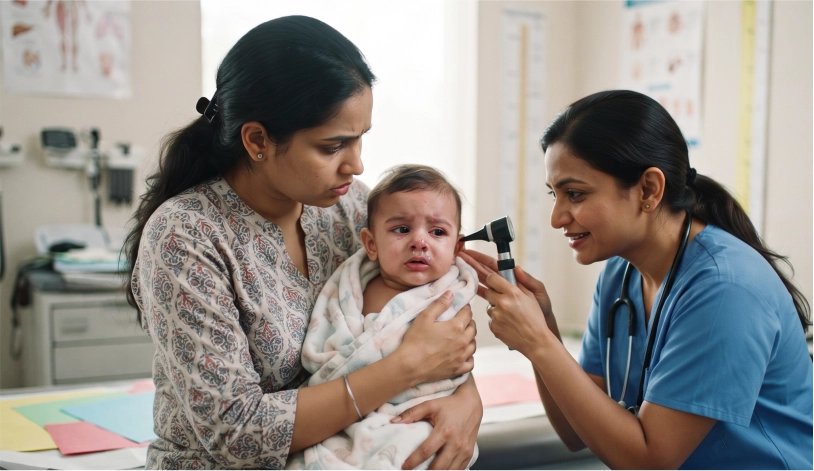
How is RSV different from a common cold in babies? At the start, the two can look identical. The difference shows up in the chest over the next few days. A cold stays mostly in the nose and throat, with congestion, sneezing and a light cough, and the baby still feeds and plays reasonably well. With RSV bronchiolitis, the breathing itself changes. It becomes faster, noisier and more effortful. Feeding often suffers because a baby cannot breathe comfortably while sucking.
A rough guide for parents:
A cold: runny nose, mild cough, normal breathing, feeding mostly normal, improving within a week
RSV bronchiolitis: cough that worsens after a few days, wheeze, fast breathing, chest retractions and reduced feeding
Only a doctor can confirm the cause. Diagnosis is usually based on examination and oxygen levels measured with a pulse oximeter. A nasal swab test may be used in some situations.
How RSV Is Treated
In routine care, there is no specific medicine that kills the RSV virus. Antibiotics do not help unless a bacterial infection develops alongside it. Treatment focuses on supporting the baby while the body clears the infection:
- Saline drops and gentle nasal suction before feeds
- Smaller, more frequent feeds to maintain hydration
- Paracetamol for fever, if your doctor advises it
- Keeping the baby away from smoke, including cigarette and incense smoke
Babies admitted to hospital may receive oxygen. If they cannot feed well, they may be given fluids through a drip or feeding tube. In more serious cases, they may need high-flow breathing support. Cough syrups are not recommended for infants.
When Should I Take My Baby to a Doctor for RSV Symptoms?
When should I take my baby to a doctor for RSV symptoms? See a doctor promptly if your baby:
- Is under three months old and has a temperature of 38°C (100.4°F) or higher
- Is breathing faster than usual or working hard to breathe
- Is taking less than half their usual feeds
- Has had no wet nappy for six hours or more
- Seems unusually drowsy or difficult to wake
Go to emergency care immediately if you notice pauses in breathing, a blue or grey colour around the lips or face, or severe chest retractions.
Preventing RSV
Several everyday steps reduce risk: handwashing, keeping sick visitors away from young infants, avoiding crowded places during peak season, and breastfeeding. Preventive antibody injections and maternal vaccines for RSV are used in some countries. Availability in India varies, so ask your pediatrician whether any option suits your baby. This is especially worth asking if your baby was born early or has a heart or lung condition.
Conclusion
Most RSV infection in babies stays mild and settles with home care. Parents should still keep a close eye on breathing and feeding, especially in the first few days. A baby who is breathing harder, feeding poorly or seems unusually sleepy needs medical review without delay. For babies who need specialist lung assessment, parents searching for the best pediatric pulmonologist for RSV in Jaipur can consult the Pediatric Pulmonology team at Neo Clinic. NICU and PICU care is available when a baby needs closer monitoring.