
Dust Allergy or Common Cold? Understanding Allergic Rhinitis in Children
16 Oct, 2026
Diwali cleaning is a household ritual. Cupboards come out, curtains come down, and years of settled dust rise into the air in a single afternoon. For some children, that is when the sneezing starts, often in bursts of five or six at a time, with a runny nose that refuses to stop. Many parents assume it is a cold. Frequently it is allergic rhinitis in children, an allergic reaction in the lining of the nose that looks like a cold but behaves very differently. Getting the distinction right matters, because the treatment differs too. Parents looking for the best pediatric allergy clinic in Jaipur will find the conversation with their doctor easier once they know what to look for.
What Is Allergic Rhinitis?
Allergic rhinitis happens when the immune system overreacts to harmless particles such as house dust mites, cockroach droppings, mould spores, pet dander or pollen. When these allergens land on the nasal lining, the body releases histamine and other chemicals that cause swelling, itching and mucus.
It can be seasonal, flaring when certain pollens are in the air, or perennial, continuing year-round with indoor triggers like dust mites. Allergic rhinitis in children is one of the most common long-term conditions of childhood and often runs in families with a history of asthma, eczema or allergies. Children with nasal allergy are also more likely to have asthma, and poorly controlled rhinitis can make asthma harder to manage.
Dust Allergy Symptoms in Children During Diwali Cleaning
Deep cleaning disturbs dust mites and their droppings, mould from damp corners, and cockroach allergens from behind cupboards. Dust allergy symptoms in children during Diwali cleaning usually appear within minutes to hours of exposure and include:
- Repeated sneezing in bouts
- A clear, watery runny nose
- A blocked nose, especially at night
- Itchy nose, eyes, throat or ears
- Red, watery eyes
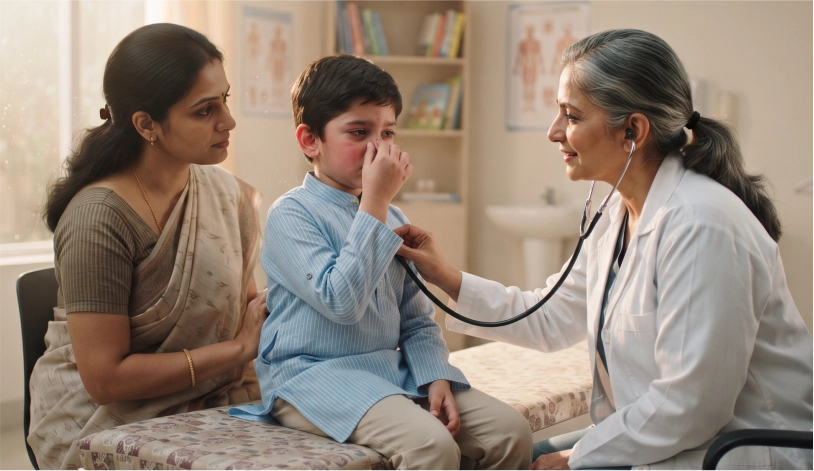
- Frequent nose rubbing, often upward with the palm, which can leave a faint crease across the nose
- Dark circles under the eyes
- Mouth breathing, snoring and disturbed sleep
- A tickly cough from mucus dripping down the throat
Children who also have asthma may start coughing or wheezing when dust levels rise.
How Can Parents Differentiate Dust Allergy from a Cold?
How can parents differentiate dust allergy from a cold? The clues lie in timing, fever and itch.
- Fever and body ache: common with a cold, absent with allergy
- Itching of the nose and eyes: typical of allergy, uncommon with a cold
- Mucus: stays clear and watery in allergy and often turns thicker, yellow or green with a cold
- Duration: a cold usually settles in 7 to 10 days, while allergy lasts as long as the exposure continues
- Pattern: allergy flares in particular places or during activities such as dusting, while a cold often spreads to others at home
- Sneezing: allergy tends to cause rapid bursts of sneezing
If your child seems to have a cold every few weeks, or one that lasts for a month, allergy is worth considering.
Why Does My Child Keep Sneezing During Diwali Cleaning?
Why does my child keep sneezing during Diwali cleaning? Cleaning releases concentrated clouds of allergens that normally sit quietly in mattresses, curtains, carpets and storage areas. A child with a dust mite allergy breathes in far more of these particles than on an ordinary day, and the nose reacts almost immediately. Cleaning chemicals, paint fumes and incense can irritate the nose further, even in children without an allergy.
Practical Steps to Reduce Exposure
- Keep children out of the room while dusting, sweeping or moving furniture, and for a while afterwards
- Use damp cloths and mops instead of dry dusting
- Wash bedding, curtains and soft toys in hot water where possible
- Use dust-mite-proof covers on mattresses and pillows
- Air rooms well after cleaning, but keep windows closed if outdoor pollution is high
- Fix damp patches that encourage mould
- Avoid strong chemical cleaners and heavy incense in children's rooms
Diagnosis and Treatment
A pediatrician diagnoses allergic rhinitis mainly from the history and an examination of the nose. When the trigger is unclear or symptoms persist, allergy testing, either a skin prick test or a blood test for specific IgE, may be recommended.
Treatment depends on severity and may include:
- Saline nasal sprays or rinses to wash out allergens and mucus
- Non-sedating antihistamines for sneezing and itching
- Steroid nasal sprays, which work well for persistent symptoms when used regularly as prescribed
- Allergen immunotherapy for selected children, when avoidance and medicines are not enough
- Older sedating antihistamines and decongestant drops are generally not suitable for regular use in children without medical advice.
When to See a Specialist
Consider a specialist review if symptoms disturb sleep or school, keep returning, do not respond to basic treatment, or occur alongside wheezing, frequent ear infections or sinus problems. Untreated allergic rhinitis can affect sleep, concentration and daytime energy.
Conclusion
Allergic rhinitis in children is common, but it is often mistaken for a cold that keeps coming back. If the sneezing always starts when the dusting does, allergy is the likelier explanation. Families looking for the best pediatric allergy clinic in Jaipur can consult Neo Clinic, where the Pediatric Pulmonology department manages allergies and breathing problems in children, with ENT support when nasal symptoms need further assessment.