
Pneumonia in Children: Early Symptoms Parents Should Never Ignore
12 Oct, 2026
Coughs are part of childhood. Most come with a cold, hang around for a week or so, and disappear. Pneumonia is different, and it often starts out looking exactly like one of those ordinary coughs. Pneumonia in children is an infection of the lungs that remains one of the leading infectious causes of death in children under five worldwide, according to the WHO, yet most cases respond well to treatment when they are caught early. The key is noticing the shift from a simple cough to a chest infection. Parents looking for a top pediatric pneumonia hospital in Jaipur often end up searching late at night, so it helps to know the signs well in advance.
What Happens in Pneumonia
In pneumonia, the tiny air sacs in the lungs, called alveoli, fill with fluid, pus or inflammatory cells, which makes it harder for oxygen to pass into the blood. Viruses such as RSV, influenza and rhinovirus cause many cases of pneumonia in children, especially the very young. Bacteria, including Streptococcus pneumoniae and Haemophilus influenzae type b, can cause more severe illness. In school-age children, Mycoplasma pneumoniae is a common cause of a milder, lingering form sometimes called walking pneumonia.
Children at higher risk include infants, those born prematurely, children with malnutrition, asthma, heart disease or weak immunity, and those exposed to tobacco smoke, indoor cooking smoke or heavy air pollution.
Early Signs of Pneumonia in Children
The early signs of pneumonia in children can be subtle, particularly in babies. Watch for:
- Fast breathing, often the earliest and most reliable sign
- Fever, sometimes with chills, though infants may have a normal or low temperature
- A cough that is getting worse rather than better
- The lower chest pulling inwards when the child breathes in
- Grunting, wheezing or flaring of the nostrils
- Chest pain, or stomach pain, which can happen when the lower lungs are affected
- Tiredness, poor appetite or refusing feeds
- Vomiting after coughing
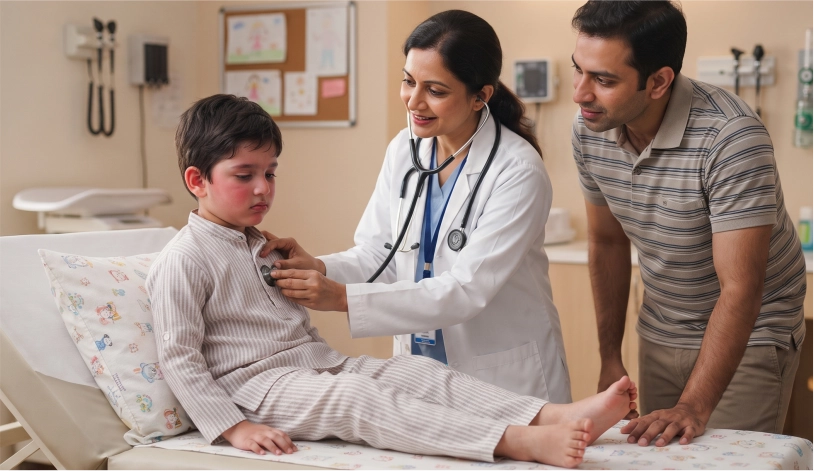
Counting Your Child's Breathing
Fast breathing is so important that the WHO uses it as a key screening sign. Count breaths for a full 60 seconds while your child is calm, ideally asleep. Breathing is considered fast if it is:
- 60 or more breaths per minute in babies under 2 months
- 50 or more in infants aged 2 to 12 months
- 40 or more in children aged 1 to 5 years
Fever can raise the breathing rate slightly, so a count taken once the temperature has come down is more reliable.
How Can Parents Identify Pneumonia in a Child Early?
How can parents identify pneumonia in a child early? Look at the pattern, not just the cough. A cold usually peaks within a few days and then improves. Pneumonia tends to do the opposite: the child seems to be recovering and then gets worse, the fever returns after settling, or the cough deepens while breathing speeds up. A child who is more tired than a cold would explain, who is breathing faster at rest, or whose chest is visibly working harder deserves a doctor's examination the same day. Parents are often the first to notice that something feels off, and that instinct is worth acting on.
How Pneumonia Is Diagnosed
A pediatrician listens to the lungs for crackles or reduced air entry, counts the breathing rate, and checks oxygen levels with a pulse oximeter. A chest X-ray may be done if the diagnosis is uncertain, the child is quite unwell, or complications such as fluid around the lungs are suspected. Blood tests help assess the severity of infection in children who need hospital care.
Treatment Options
Treatment depends on the likely cause and the child's condition. Bacterial pneumonia is treated with antibiotics, and completing the full course matters even when the child feels better after a couple of days. Viral pneumonia usually does not need antibiotics, and care focuses on fluids, rest and fever control.
Hospital admission may be recommended if a child:
- Has low oxygen levels
- Shows chest indrawing, grunting or severe breathing difficulty
- Is too unwell to drink or keeps vomiting
- Is a young infant
- Has an underlying condition, or does not improve on oral antibiotics within about 48 hours
In hospital, children may receive oxygen, IV fluids, intravenous antibiotics and, if needed, intensive care support.
How Do I Know If My Child's Cough Has Turned Into Pneumonia?
Many parents ask, how do I know if my child's cough has turned into pneumonia? The warning signs usually come together: a cough that worsens after several days, fever that persists or returns, fast breathing counted at rest, and a child who seems tired and unwell rather than just sniffly. Seek emergency care straight away for blue lips, severe difficulty breathing, inability to drink, convulsions or unusual drowsiness.
Prevention
Routine vaccines protect against several major causes of pneumonia, including the pneumococcal (PCV), Hib, measles and pertussis vaccines, and yearly flu vaccination is recommended for young children. Exclusive breastfeeding for the first six months, good nutrition, handwashing, and keeping children away from tobacco and indoor cooking smoke all lower the risk.
Conclusion
Most pneumonia in children can be treated successfully when it is recognised early. Count breaths when you are unsure, watch whether your child is improving or getting worse, and trust the sense that this cough feels different. Families looking for a top pediatric pneumonia hospital in Jaipur can consult Neo Clinic, where general pediatrics, pediatric pulmonology, pediatric radiology and a dedicated PICU work together when a child's chest infection needs closer care.