
Hand, Foot and Mouth Disease in Children: Symptoms, Spread and School Safety
27 Oct, 2026
It often begins with a note from the school or a message in the parents' group: a few children in class have spots on their hands and blisters in their mouths. A day or two later, your own child has a fever and refuses food. Hand foot and mouth disease in children is a common viral illness, especially in those under five, and it spreads quickly through playschools and daycare centres. It looks alarming and can make children miserable for a few days, but most recover fully within a week to ten days. If you are trying to find a pediatrician for hand foot and mouth disease in Jaipur, it helps to first understand what the illness usually looks like and when it needs a closer look.
What Causes HFMD?
HFMD is caused by enteroviruses, most commonly coxsackievirus A16 and A6, and sometimes enterovirus 71, which is linked with a higher chance of complications. Outbreaks of hand foot and mouth disease in children spread easily through:
- Saliva, nasal mucus, and droplets from coughs and sneezes
- Fluid from the blisters
- Stool, particularly during nappy changes
- Contaminated toys, surfaces and shared utensils
Children are most contagious during the first week, but the virus can stay in stool for several weeks after recovery. That is why handwashing matters even after the spots fade. Adults can catch it too, although they often have milder symptoms or none at all.
HFMD Symptoms and Treatment in Children
Symptoms usually appear three to six days after exposure. Understanding HFMD symptoms and treatment in children helps parents manage the illness calmly at home.
Typical Symptoms
- Fever, sore throat and reduced appetite, often a day or two before the spots
- Painful red spots in the mouth that turn into small ulcers on the tongue, gums and inner cheeks
- A rash of flat or raised red spots, sometimes with small blisters, on the palms and soles
- Spots on the buttocks, knees, elbows or nappy area
- Irritability, drooling, and refusing food or drink because of mouth pain
Not every child has all the symptoms, and the rash can be very mild. Some children develop peeling skin on the fingers, or even lose fingernails or toenails a few weeks later. This is temporary, and the nails grow back.
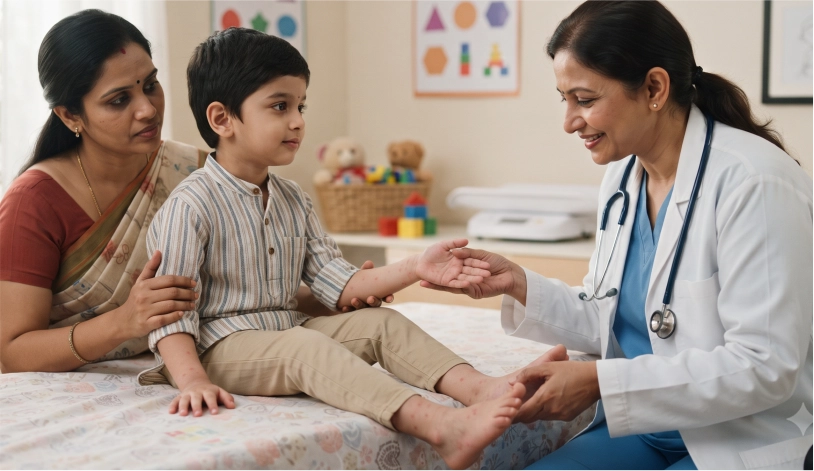
Treatment at Home
There is no antiviral medicine for routine HFMD, and antibiotics do not help. Treatment focuses on comfort and hydration:
- Offer small, frequent sips of water, ORS, milk or cool fluids
- Serve soft, cold foods such as curd, custard or kulfi, which are easier to swallow than hot or spicy food
- Avoid acidic, salty or spicy foods that sting the ulcers
- Give paracetamol for fever and pain, at the dose your doctor advises
- Keep blisters clean and do not burst them
- Wash hands thoroughly after nappy changes and wiping noses
What Should I Do If My Child Has Mouth Sores and Rashes?
What should I do if my child has mouth sores and rashes? Start by keeping your child hydrated and comfortable, and book a pediatrician visit to confirm the diagnosis. Mouth sores with a rash are often HFMD, but similar features can appear in chickenpox, herpes stomatitis, measles or allergic reactions, each of which is managed differently. A doctor can usually tell the difference by examining the pattern of spots.
Seek medical attention urgently if your child:
- Is drinking very little or has not passed urine for six to eight hours
- Has fever lasting more than three days, or above 39°C (102.2°F)
- Seems unusually sleepy, floppy or difficult to wake
- Has a severe headache, neck stiffness or repeated vomiting
- Develops jerky movements, trembling, unsteady walking or weakness
- Has any breathing difficulty
- Is a young infant
These signs are uncommon, but they may point to dehydration or, rarely, complications affecting the brain or heart.
When Can a Child With HFMD Return to School?
When can a child with HFMD return to school? Most children can return once they have been fever-free for at least 24 hours without medicine, are eating and drinking normally, and their blisters have dried. For many children, this is around a week after symptoms began. School policies vary, so check with your child's school, and some may ask for a doctor's note.
Returning after the blisters dry lowers the risk of spread but does not remove it completely, because the virus can still be shed in stool. Good hand hygiene at home and at school remains important.
Preventing the Spread at Home and School
- Wash hands with soap and water, especially after using the toilet, changing nappies and before meals
- Clean toys, doorknobs and shared surfaces regularly
- Avoid sharing cups, spoons and towels
- Keep the unwell child home from daycare or school during the illness
- Teach children to cover coughs and sneezes
Conclusion
Hand foot and mouth disease in children is uncomfortable and highly contagious, but it is usually mild and settles on its own with good home care. The priorities are keeping fluids going, easing pain, and watching for the uncommon warning signs. Parents who want a pediatrician for hand, foot and mouth disease in Jaipur can consult the general pediatrics team at Neo Clinic, with pediatric neurology and intensive care support available if complications arise.