
Winter Breathing Problems in Babies: Fast Breathing, Chest Retractions and Emergency Warning Signs
14 Nov, 2026
A baby with a blocked nose in winter is common and usually settles at home. Breathing that looks fast, noisy or hard work is different, and parents often can't tell which one they're seeing, especially at night. Knowing the signs helps you decide quickly whether to keep watching or go to a pediatric emergency hospital in Jaipur.
This guide covers what trouble breathing looks like in a baby, what commonly causes it in winter, and which signs mean you shouldn't wait.
Why Winter Is Harder on a Baby's Airways
Babies breathe mostly through the nose, and their airways are tiny. Even a little swelling or mucus narrows them far more than it would in an older child. Winter brings RSV, influenza and other viruses, along with cold dry air, smoke and crowded indoor rooms. Newborns and premature babies have the least reserve, so they can tire quickly.
How Do I Know If My Baby Is Having Trouble Breathing?
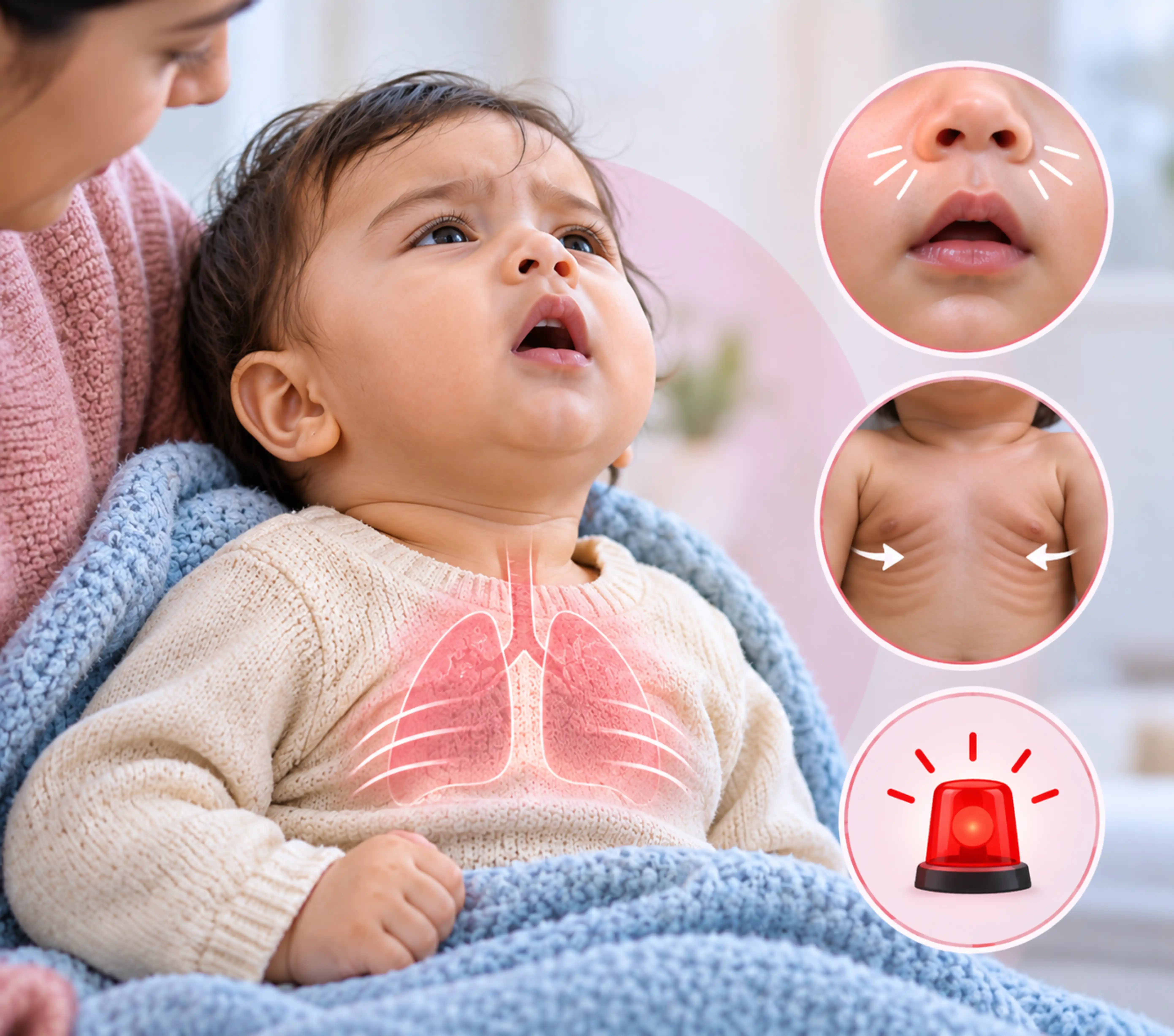
Watch your baby when they're calm and, ideally, undressed from the chest up. These are the signs to look for:
- Fast breathing: count breaths for a full minute. WHO guidance treats 60 or more breaths per minute in babies under two months, and 50 or more between two and twelve months, as fast breathing.
- Chest retractions: the skin pulling in between the ribs, under the rib cage or at the base of the throat with each breath.
- Nostril flaring with every breath.
- Grunting at the end of each breath.
- Head bobbing with each breath.
- Noisy breathing, such as wheeze, a high-pitched sound or a barking cough.
- Colour change, a blue or grey tinge to the lips, tongue or face.
- Tiring while feeding, or being too weak to cry properly.
Newborns can breathe irregularly, with short pauses of a few seconds, and that's often normal. Longer pauses, or any pause with colour change or floppiness, are not.
Common Causes of Winter Breathing Trouble
- Bronchiolitis, most often caused by RSV, in babies under two years
- Pneumonia, a lung infection that can follow a cold
- Croup, with a barking cough and noisy breathing, mostly in older babies and toddlers
- Wheezing illnesses that behave like early asthma, especially with a family history of allergy
- Smoke exposure from tobacco, or coal and wood heaters in closed rooms, which also carries a carbon monoxide risk
- Prematurity, low birth weight, or heart and lung conditions that make breathing harder from the start
- Choking or an inhaled object, and reflux that spills into the airway
What Doctors Check
The doctor looks at breathing rate and effort, listens to the chest and checks hydration and feeding. A pulse oximeter measures oxygen levels painlessly through the skin. A chest X-ray isn't routine in typical bronchiolitis, but it helps when pneumonia or another complication is suspected. A nasal swab can identify RSV or flu. In severe cases, blood gas tests show how well the baby is ventilating. For newborns, doctors may also look for infection or a heart problem.
Treatment Options
- Saline nasal drops and gentle suction before feeds, with small, frequent feeds
- Oxygen when blood oxygen levels are low
- Fluids through a tube or IV when a baby can't feed safely
- High-flow oxygen, CPAP or ventilator support in an intensive care unit for severe cases
- Antibiotics only when a bacterial infection is found; steroids or nebulised medicines only when the doctor sees a reason, since they aren't routine for bronchiolitis
- Specialised neonatal respiratory care in Jaipur for premature or critically ill newborns, which can include CPAP, surfactant and ventilation in a NICU
Emergency Warning Signs: Don't Wait
Go to a hospital immediately if you notice:
- A blue or grey colour around the lips or face
- Pauses in breathing
- Severe chest retractions, grunting or obvious struggle
- A baby who is floppy, very drowsy or hard to wake
- Inability to feed, or no wet diaper for six to eight hours
- Any breathing difficulty in a baby under two or three months old
- Fever of 38°C (100.4°F) or higher in a baby under three months
Where Should I Take My Baby for Breathing Problems in Jaipur?
A baby who is struggling needs a hospital where pediatric evaluation and intensive care are in the same building, so there's no transfer delay if things get worse. Neo Clinic has a Neonatal Intensive Care Unit for premature, underweight and critically ill newborns, a Pediatric Intensive Care Unit for children needing life-saving treatment, and a pediatric pulmonology department for asthma, allergies and chest infections. When comparing options for the Best Hospital for Baby Breathing Problems in Jaipur, look for exactly that combination.
Keeping Your Baby's Breathing Safe at Home
- Wash hands before touching the baby, and limit visits from anyone with a cold
- Keep the home smoke-free, and never run coal or wood heaters in a closed room
- Dress the baby warmly in layers without overwrapping
- Keep vaccines on schedule, including pneumococcal, Hib and influenza from six months
- Continue breastfeeding where possible
- After bronchiolitis, expect a cough for two to three weeks, and keep watching feeding and breathing
Conclusion
Most winter colds in babies pass without trouble, but breathing effort is the sign that matters most. Fast breathing, chest retractions, grunting or colour change aren't things to watch overnight. If you're unsure, a prompt check is always the safer choice. The team at Neo Clinic can assess your baby's breathing and arrange the right level of care.