
Child Snoring at Night: Enlarged Tonsils, Adenoids, Sleep Apnea and Treatment Options
16 Nov, 2026
A child who snores through a cold is nothing unusual. A child who snores loudly every night, breathes through the mouth and wakes up tired is a different story. That's when many parents start looking for a pediatric ENT specialist in Jaipur.
Here's how to tell harmless snoring from sleep apnea, what causes it, and what treatment actually involves.
Snoring in Children: When It's Harmless and When It Isn't
About one in ten children snore regularly, and roughly one to five in a hundred have obstructive sleep apnea (OSA). Simple snoring is noise without breathing pauses, oxygen drops or broken sleep. In OSA, the airway repeatedly narrows or closes during sleep, disturbing both sleep quality and oxygen levels. The difference matters because OSA can affect growth, behaviour and school performance.
Is Loud Snoring in Children a Sign of Sleep Apnea?
Not always, but loud snoring on three or more nights a week is the most common sign of OSA, so it deserves a medical opinion. These features raise concern:
- Pauses in breathing, gasping or choking sounds during sleep
- Restless sleep, or sleeping with the neck stretched back
- Mouth breathing and a dry mouth in the morning
- Heavy night sweating, or bedwetting returning after dryness
- Morning headaches and difficulty waking
- Daytime sleepiness, or the opposite: hyperactivity, poor focus and irritability
- Slow weight gain in some children
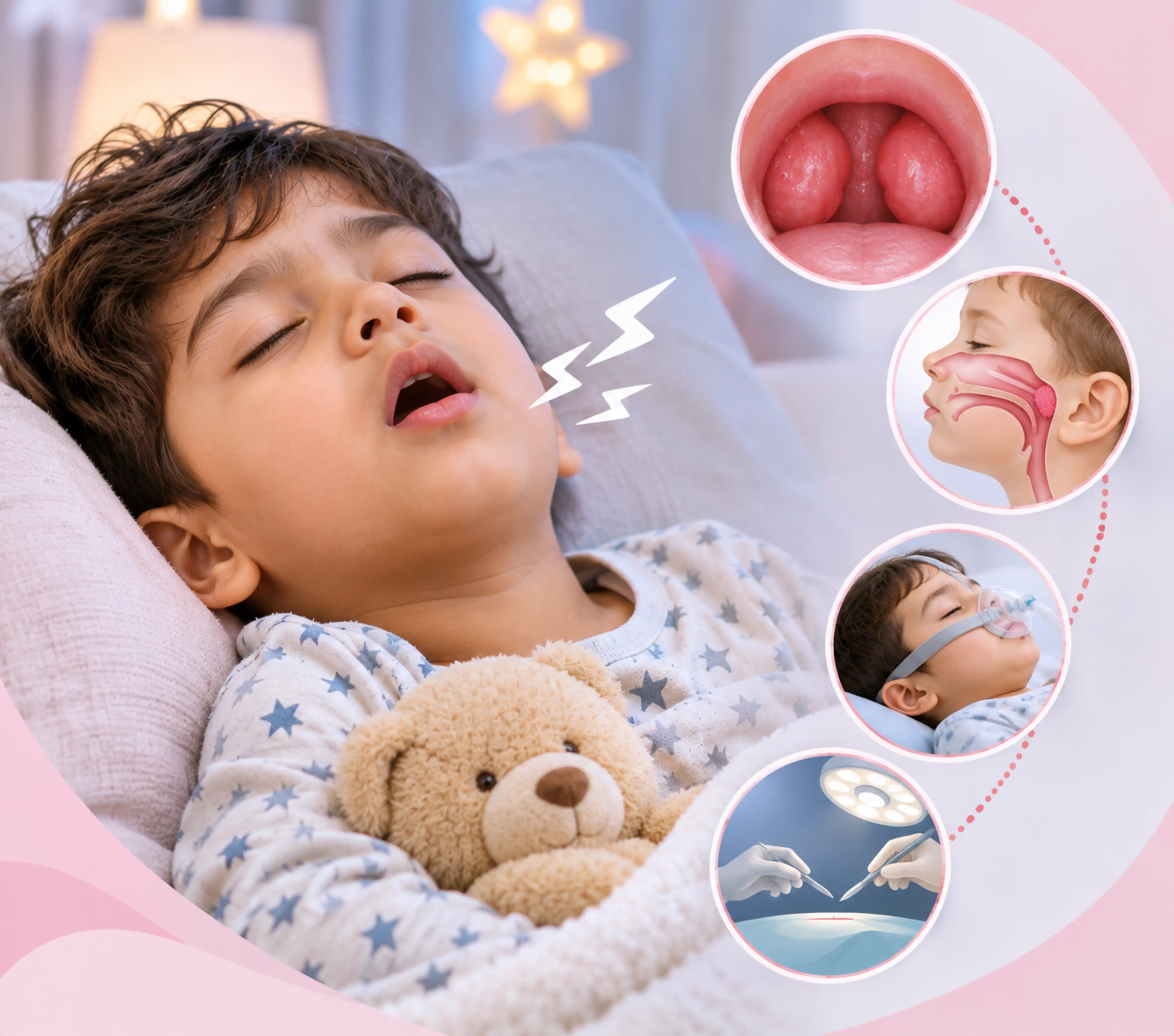
What Causes Snoring: Tonsils, Adenoids and More
- Enlarged adenoids and tonsils: these are largest relative to the airway between about two and eight years of age, which is why this is the main cause in children
- Allergic rhinitis or repeated sinus infections: that keep the nose blocked
- Obesity: which adds tissue around the airway
- Structural factors: such as a small jaw or a deviated nasal septum
- Certain conditions: such as Down syndrome or neuromuscular disorders
- Enlarged adenoids often bring other clues too: a blocked nose, a nasal-sounding voice, repeated ear infections and sometimes reduced hearing from fluid behind the eardrum.
How Doctors Evaluate Snoring
The doctor asks about sleep patterns and checks the nose, throat, tonsils and jaw. A short video of the snoring on your phone can be very useful. A neck X-ray or a flexible nasal scope can show adenoid size. A hearing test is added if ear problems are suspected. An overnight sleep study (polysomnography) is the standard test to confirm OSA and its severity, and doctors use it when the diagnosis is unclear or before surgery in some children. It's painless, with small sensors on the skin.
Treatment Options
- Watchful waiting with a recheck for mild snoring without breathing pauses
- Saline rinses and a doctor-prescribed nasal steroid spray for adenoid swelling or allergy
- Allergy treatment and trigger avoidance
- Weight management when a child is overweight
- Adenotonsillectomy (removal of adenoids and tonsils), the usual first treatment for OSA caused by enlarged tissue; adenoidectomy alone is used when only the adenoids are the problem
- CPAP for children who aren't suitable for surgery or whose apnea continues afterwards
- Orthodontic treatment in selected children with a narrow jaw
Not every snoring child needs surgery. Adenoid treatment in Jaipur begins with deciding whether the child needs it at all.
Recovery After Adenoid or Tonsil Surgery
Children usually go home the same day or after a short stay. A sore throat and referred ear pain are common for a week or two. Soft, cool foods, plenty of fluids and prescribed pain relief help. Most children return to school in about a week to ten days, as the surgeon advises. Any bright red bleeding from the mouth or nose needs immediate medical attention. Snoring and daytime behaviour often improve over the following weeks.
When to See a Doctor
- Pauses in breathing, gasping or choking at night
- Snoring on most nights for more than a few weeks without a cold
- Daytime sleepiness, behaviour changes or falling school performance
- Bedwetting that returns after being dry
- Poor growth or weight gain
- Blue lips during sleep, which needs emergency care
Where Can I Get Treatment for Child Snoring in Jaipur?
Neo Clinic has an ENT specialist (otorhinolaryngologist), a pediatric pulmonology department for breathing disorders, and pediatric surgery and pediatric anaesthesiology support for children who need an operation. That means evaluation, any sleep-related breathing assessment and surgery, if it's advised, can happen within one pediatric setting. When looking for the Best ENT Doctor for Children in Jaipur, ask whether the team treats children regularly and has pediatric anaesthesia and intensive care backup.
Reducing Snoring Triggers at Home
- Treat allergies and colds promptly, and clear the nose before bedtime
- Keep the home smoke-free
- Support a healthy weight with regular physical activity
- Keep a regular sleep schedule
- Record a short video of the snoring to show your doctor
Conclusion
Snoring is common in childhood, and most of it is harmless. Loud nightly snoring with pauses, restless sleep or daytime tiredness is the kind that deserves a proper look, because treatment can make a real difference to sleep, behaviour and growth. If you're unsure, a pediatric ENT consultation at Neo Clinic can help you decide whether your child needs tests, treatment or simply monitoring.