
Child Walking on Tiptoes: Normal Development, Autism, Muscle Tightness and When to Seek Help
25 Nov, 2026
Many toddlers walk on their toes at some point, and often parents laugh about it. When it continues, it starts to raise questions. Is it a habit? A tight muscle? A sign of something neurological? Often nothing serious is behind it, but a few causes need attention, and a pediatric orthopedic doctor in Jaipur can help sort out which is which.
Toe Walking in Children: What It Actually Means
Toe walking is walking on the balls of the feet without the heel touching the ground, either now and then or all the time. Toddlers commonly do it while learning to walk, and it usually fades as the heel-to-toe pattern develops by around two to three years. When no cause is found, it's called idiopathic toe walking, which is common and diagnosed only after other causes are excluded.
Is Toe Walking in Children Normal or a Sign of a Medical Problem?
It's more likely to be normal when:
- The child is under about two to three years
- They can walk flat-footed when asked, or do so at times
- Both feet are affected equally
- Development, speech and play are otherwise on track
- A parent or sibling also toe walked
It's more concerning when toe walking:
- Continues beyond three years or is constant
- Affects one side only
- Comes with stiff or tight legs
- Appears after walking had been normal
- Comes with frequent falls, weakness, clumsiness or difficulty climbing stairs or getting up from the floor
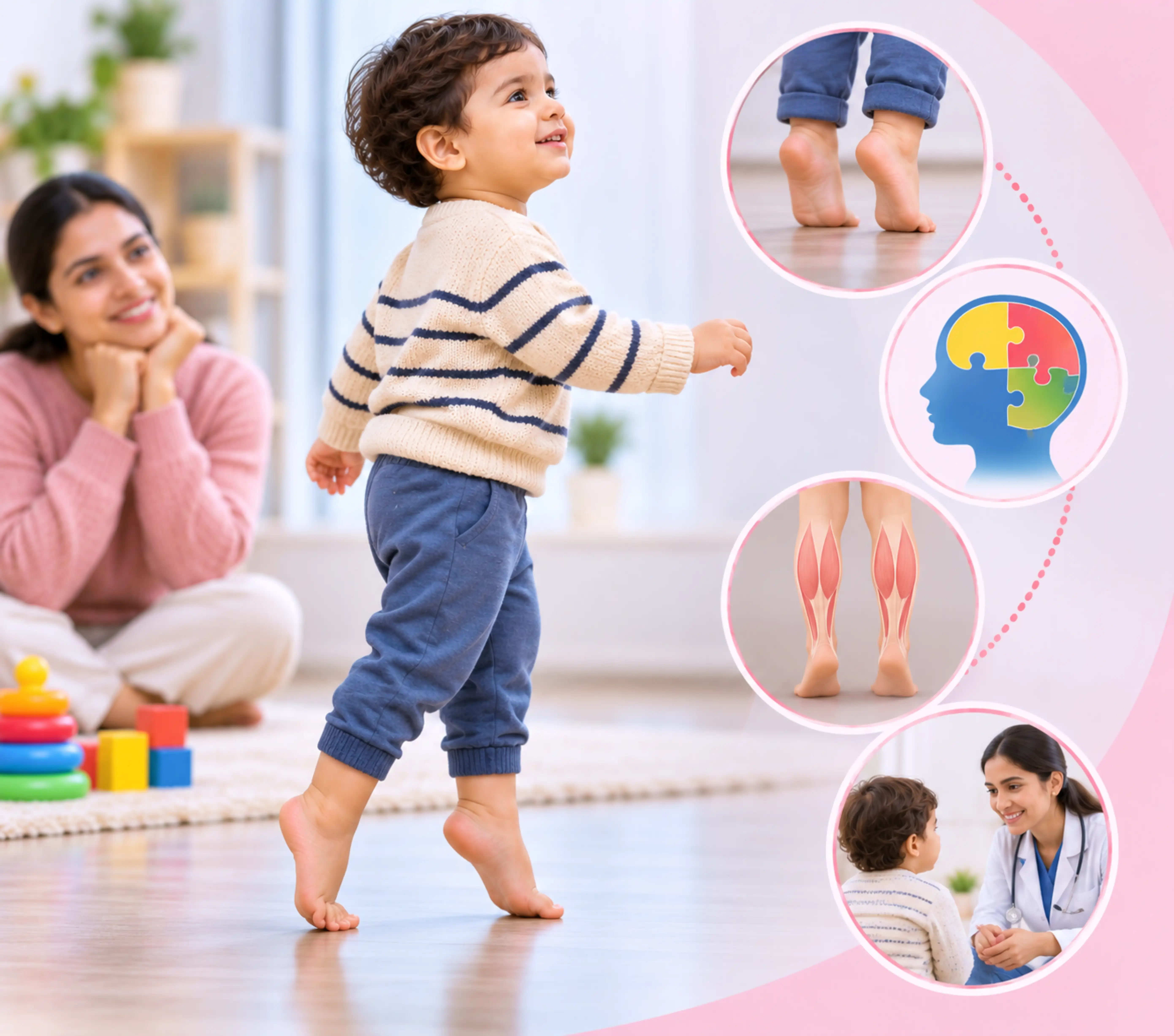
Possible Causes
- Idiopathic toe walking, often a habit or sensory preference that runs in families
- Tight calf muscles or a short Achilles tendon, sometimes the result of long-standing toe walking
- Cerebral palsy (spastic type), with stiffness and delayed milestones
- Neuromuscular conditions, such as muscular dystrophy, with weakness, frequent falls and trouble rising from the floor
- Spinal problems, such as a tethered cord, which are rare, though a dimple or tuft of hair on the lower back is worth mentioning
- Autism spectrum disorder or sensory processing differences
- Developmental or language delay
- Leg-length differences or hip problems
Toe walking is more common in autistic children, but most toe walkers aren't autistic. Toe walking alone never diagnoses autism. Doctors look at the whole picture, including speech, eye contact, response to name, play and sensory sensitivities.
How Doctors Assess a Child's Gait
A child gait assessment in Jaipur starts with watching your child walk and run barefoot. The doctor asks about birth, milestones and family history, then checks ankle movement with the knee straight and bent, muscle tone, strength, reflexes, the spine and leg lengths. Developmental and social screening is included when there are other concerns. Blood tests for muscle enzymes, spine MRI or nerve studies are used only when something in the history or examination points that way.
Treatment Options
- Watchful waiting, with regular rechecks, for toddlers with a normal examination who can stand flat-footed
- Calf stretching, strengthening exercises and gait training with a physiotherapist
- Serial casting for fixed tightness, usually over several weeks
- Orthoses or supportive footwear
- Botulinum toxin injections in selected children, such as those with spasticity
- Surgical lengthening of the Achilles tendon, only for persistent fixed tightness that hasn't improved with non-surgical treatment, usually in older children
- Treating the underlying cause, such as neurological or developmental conditions
- Occupational therapy when sensory difficulties play a role
When to See a Doctor
- Toe walking continues past age three
- It begins after your child had been walking normally
- Only one foot is affected
- Legs look stiff, or your child can't bring the heels down
- There's pain, limping, frequent falls or poor balance
- Your child has lost skills they had before
- Speech or social development also seems delayed
Where Can I Get Toe Walking Treatment for My Child in Jaipur?
Neo Clinic has a Pediatric Orthopedics and Deformity Correction department for bone, joint and deformity problems in growing children, along with a physiotherapist, pediatric neurology and the Saarthak Child Development Center for developmental and sensory concerns. If you're comparing the Best Pediatric Orthopedic Hospital in Jaipur, look for a setting where orthopedic, neurological and therapy teams can work together on the same child.
Home Care and What to Expect
- Encourage barefoot play on varied surfaces such as grass and sand
- Make stretching a daily routine of about five to ten minutes, as the physiotherapist shows you
- Play heel-walking and "stomping" games
- Choose supportive footwear
- Expect gradual progress, and keep follow-up visits
- After casting, a child may be tired and walk differently for a short period while adjusting
Conclusion
Toe walking is common and often harmless in toddlers, but it deserves attention when it lasts past three, is one-sided or comes with other concerns. A simple assessment can rule out the rare serious causes and start the right treatment early. If you'd like an expert look at your child's walking, the pediatric orthopedics team at Neo Clinic can help.