
Winter Joint Pain in Children: Growing Pains, Vitamin D Deficiency and Orthopedic Warning Signs
26 Nov, 2026
A child waking at night crying about aching legs is a very common scene in winter. Most of the time it's harmless. A few causes need treatment, and parents deserve clear guidance on which is which, whether from their pediatrician or a pediatric orthopedic specialist in Jaipur.
Aches and Pains in Growing Children
Limb and joint pain are among the most common complaints in school-age children, and most are benign. Cold weather doesn't damage joints or cause arthritis. But winter does bring less outdoor play, less sunlight, more viral illness (which brings body aches) and stiffer muscles after sitting still, so complaints tend to get noticed more.
Why Does My Child Have Leg Pain at Night During Winter?
Growing pains are the most common reason. The typical picture is:
- Aching in both legs, in the calves, thighs or behind the knees, not in the joints themselves
- Pain in the evening or night, sometimes waking the child, but gone by morning
- Age three to twelve
- Normal walking and play the next day, with no limp
- No swelling, redness, warmth or fever
- Relief from massage, warmth and a cuddle
The exact cause isn't clear. Tired muscles after an active day are the likely contributor, and the pain is simply more noticeable when the distractions of the day are gone.
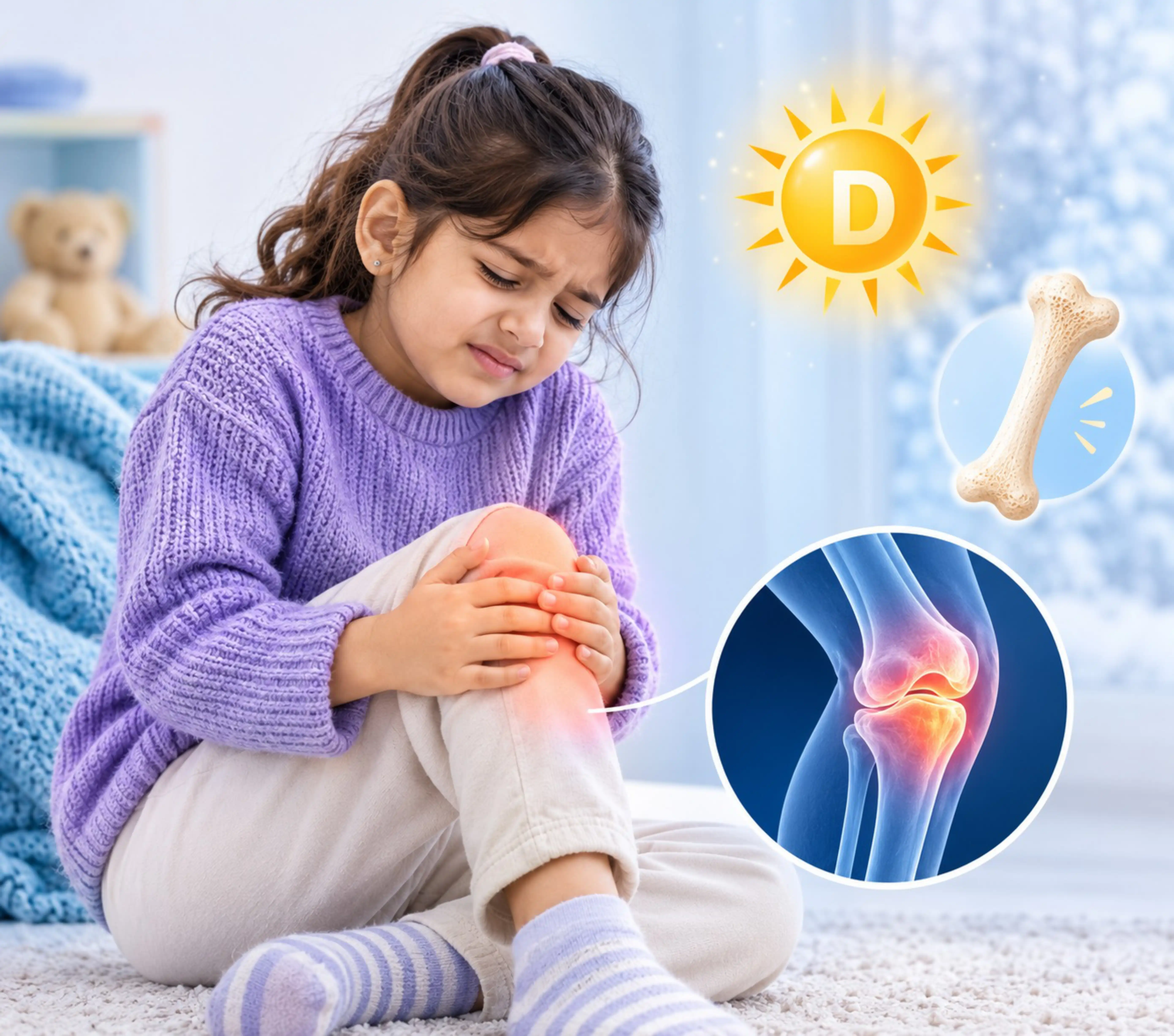
Vitamin D Deficiency and Bone Pain
Vitamin D helps the body absorb calcium for strong bones. Deficiency is common among Indian children despite abundant sunshine, because of indoor lifestyles, covered clothing, air pollution and low dietary intake, and winter reduces sun exposure further. Signs can include:
- Bone and muscle aches and tiredness
- Muscle weakness or delayed walking
- Bowed legs or knock knees
- Wide wrists or delayed teething
- Frequent infections
- In severe cases, rickets, or seizures from low calcium in young infants
A blood test for 25-hydroxyvitamin D, usually with calcium, phosphate and alkaline phosphatase, confirms it. Vitamin D testing for children in Jaipur is simple, and treatment dose and duration depend on age, weight and the level found. Avoid giving high-dose sachets without advice, since too much vitamin D can raise calcium to harmful levels.
When Joint Pain Needs a Doctor's Review
Seek review if joint or bone pain comes with:
- Pain in one joint with swelling, redness or warmth
- Fever with joint or bone pain, or refusal to put weight on the leg, which can signal an infection and needs urgent care
- A limp or refusal to walk
- Morning stiffness lasting more than about 30 minutes that eases with activity
- Pain lasting more than six weeks
- Constant, severe or one-spot pain, or pain that wakes the child every night
- Joint pain that moves from joint to joint after a sore throat and fever
- Pale skin, easy bruising, tiredness or unexplained weight loss
- A recent injury
How Doctors Evaluate Joint and Bone Pain
The doctor takes a detailed history, examines every joint, the spine and the gait, and checks growth. Depending on what's found, tests can include a blood count and inflammation markers (ESR, CRP), vitamin D, calcium and phosphate levels, an X-ray or ultrasound, and, when there are features of arthritis or an autoimmune condition, specific antibody tests. Growing pains are diagnosed when the pattern is typical and the examination and tests are normal.
Treatment
- Growing pains: reassurance, gentle massage, a warm compress, bedtime stretching and an occasional dose of paracetamol as directed
- Vitamin D and calcium supplements when a deficiency is confirmed, with a repeat level after the course
- Rest and physiotherapy for strains and injuries
- Urgent antibiotics, often by IV, for bone or joint infection
- Rheumatology treatment for juvenile idiopathic arthritis, which can include anti-inflammatory medicines, disease-modifying drugs and eye monitoring
- Orthopedic correction for deformities when needed
Where Can I Get My Child Evaluated for Joint and Bone Pain in Jaipur?
Neo Clinic has pediatric orthopedics for bone, joint and deformity problems in growing children, a pediatric rheumatology department for arthritis and autoimmune conditions, and pathology and radiology for the tests that go with them. A child joint pain treatment in Jaipur pathway should start with a careful history, then add only the tests that are needed.
Keeping Bones Strong and Pain-Free
- Spend some time in sunlight on bare arms and legs most days, as your doctor advises
- Include calcium-rich foods such as milk, curd, paneer, ragi and green leafy vegetables
- Encourage active play and regular activity
- Choose well-fitting footwear
- Keep school bags to a sensible weight
- Support healthy sleep and a healthy weight
- Don't give vitamin D or calcium supplements without guidance
Conclusion
Aching legs in the evening are usually growing pains, and a vitamin D check can catch a treatable deficiency. Swelling, fever, a limp or pain that persists deserve a prompt medical review. The pediatric orthopedics and rheumatology teams at Neo Clinic can help you work out what's behind your child's pain.