
Child Vomiting After Eating: Food Intolerance, Reflux, Stomach Problems and When to See a Specialist
27 Nov, 2026
A child who vomits after meals leaves parents wondering about the food, the stomach or something else entirely. Most episodes are brief and settle on their own. When vomiting keeps happening, a pediatric gastroenterologist in Jaipur can look for the cause, and some warning signs mean you shouldn't wait.
Vomiting, Spitting Up and Reflux: Knowing the Difference
Spitting up is the easy return of small amounts of milk, and it's very common in babies. It peaks around four months and mostly clears by 12 to 18 months in babies who are feeding and gaining weight well. Vomiting is more forceful and involves larger amounts. Gastro-oesophageal reflux disease (GERD) is when reflux causes problems such as poor weight gain, feeding refusal, irritability or breathing symptoms.
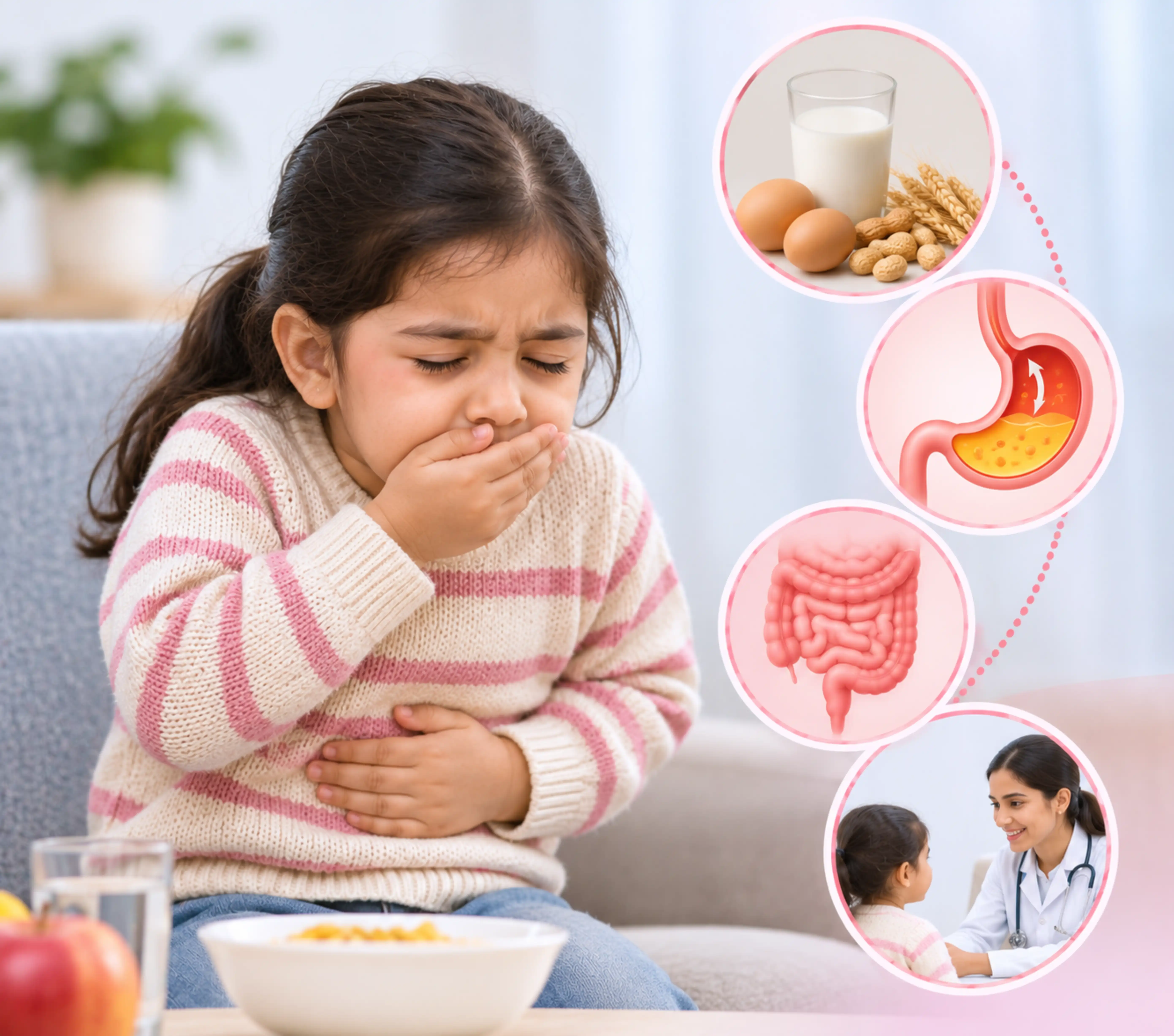
Why Does My Child Vomit After Eating Food?
The cause often depends on age.
In infants:
- Normal reflux, overfeeding or swallowing air during feeds
- Cow's milk protein allergy, with vomiting, eczema, loose stools or blood-streaked stool
- Pyloric stenosis, usually between 2 and 8 weeks of age, with forceful, projectile vomiting after most feeds and hunger right afterwards, which needs prompt assessment
In older children:
- Gastroenteritis, including winter stomach infections
- Food intolerance, such as lactose, with bloating, gas and loose stools after dairy
- Food allergy, with hives, lip or face swelling and vomiting soon after eating
- Gastritis, reflux or an ulcer, sometimes linked to H. pylori infection
- Constipation, celiac disease, or food sticking in the food pipe (eosinophilic oesophagitis)
- Infections elsewhere, such as the ear, throat or urinary tract
- Eating too fast, large meals or running around right after eating
- Anxiety, cyclic vomiting syndrome or, rarely, a bowel blockage or appendicitis
Warning Signs That Need Urgent Care
Go to a hospital promptly if your child has:
- Green (bile) vomit, or blood or coffee-ground material in the vomit
- Projectile vomiting in a young infant
- A swollen, hard or very tender belly, or severe pain, especially in the lower right
- Dehydration signs such as a dry mouth, sunken eyes, drowsiness or no urine for six to eight hours
- Vomiting after a head injury, or with severe headache, neck stiffness or a rash with fever
- Blood or black stool
- Poor weight gain or weight loss
- Swelling of the lips or face, hives or trouble breathing after eating, which is an emergency
- Vomiting lasting more than a day in an infant or toddler
How Specialists Find the Cause
Doctors ask about timing in relation to meals, what the vomit looks like, other symptoms and family history of allergy or celiac disease. They check growth and examine the abdomen. Tests are chosen by suspicion: stool, urine or blood tests (including celiac antibodies and electrolytes), an abdominal ultrasound, a contrast study of the food pipe and stomach, or an upper endoscopy with biopsies for persistent problems. Many children need no tests at all.
Treatment Based on the Cause
- Infant reflux: smaller, more frequent feeds, burping, holding the baby upright for 20 to 30 minutes, correcting bottle technique and thickened feeds when the doctor advises
- Acid-reducing medicine only for diagnosed GERD, not routinely
- Cow's milk protein allergy: supervised dairy elimination, or a special formula
- Lactose intolerance: reducing lactose or using lactose-free products
- Gastroenteritis: oral rehydration solution in small, frequent sips, continued feeding and anti-nausea medicine only if a doctor prescribes it
- Gastritis or ulcer: acid suppression, plus antibiotics if H. pylori is confirmed
- Celiac disease: a gluten-free diet after confirmed diagnosis, and not before testing
- Pyloric stenosis: a short surgical procedure, which has excellent results
- Hospital care for dehydration or a blockage
Where Can I Get Treatment for Frequent Vomiting in Children in Jaipur?
Neo Clinic's Pediatric Gastroenterology and Hepatology department provides specialised digestive and liver care for children with complex gastrointestinal conditions, and pediatric surgery, radiology and pathology are on site for conditions that need them. Families seeking child vomiting treatment in Jaipur benefit from having diagnosis, imaging and surgical care in one place. When comparing the Best Pediatric Gastroenterology Hospital in Jaipur, ask whether pediatric surgery and intensive care are available if the cause turns out to be serious.
Preventing Vomiting and Helping Your Child Recover
- Wash hands, and use safe food and water
- Offer smaller meals, and avoid lying down right after eating
- Keep a food and symptom diary to spot triggers
- Encourage slow eating
- After vomiting, give small sips of ORS (a teaspoon every few minutes), then bland foods as tolerated
- Return to normal meals gradually
- Keep the rotavirus vaccine on schedule
Conclusion
An occasional vomit after a meal rarely signals anything serious. A pattern that repeats, or one that comes with weight loss, blood, green vomit or dehydration, needs expert review. The pediatric gastroenterology team at Neo Clinic can help find the cause and plan treatment.